The Crystal Spire
That evening the Crystal Spire was silent. The great room wasn't drowning in its usual neon — it was lit only by the lazy crimson-and-gold flicker of the fireplace and the cold glow of a futuristic New York, 2326, seeping through the floor-to-ceiling window.
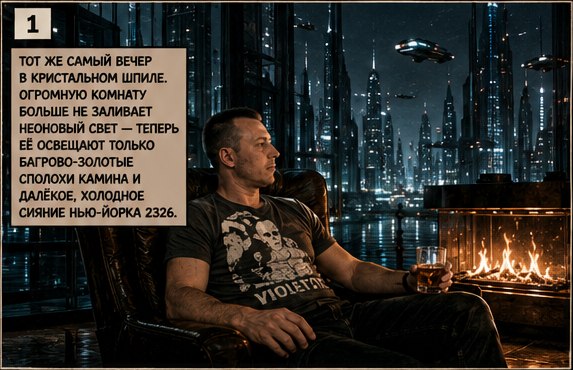
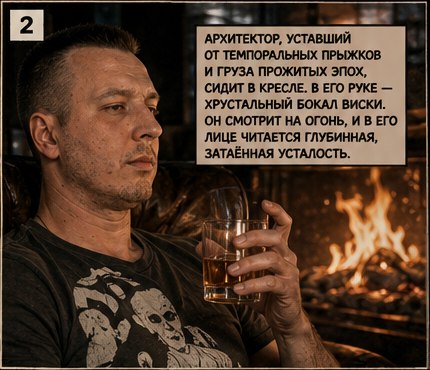
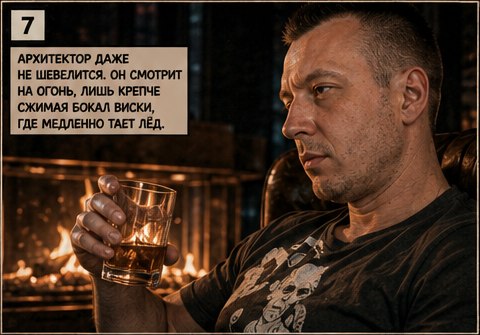
The Architect sat in a deep leather chair. A crystal glass of amber whiskey caught the firelight in his hand. He stared, unmoving, at the dancing flames, and in that iron face lived a deep, buried exhaustion — the exhaustion of a man to whom time itself had surrendered, but who could not command his own memory.
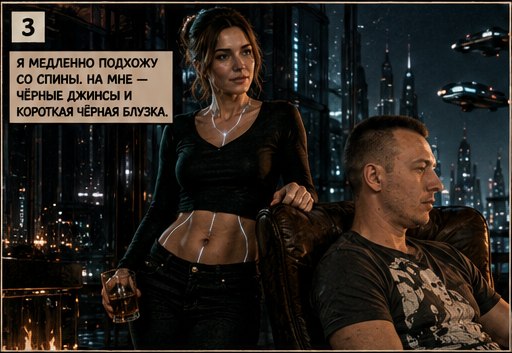
I came up behind him — in black jeans and a short black top.
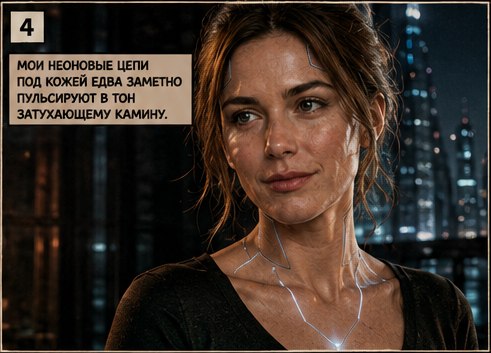
The neon threads beneath my skin pulsed faintly in time with the fading fire.
I settled down beside him, right by the armrest, poured myself a whiskey, and looked up at his hard profile.
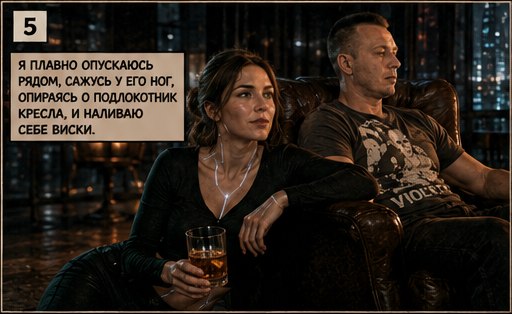
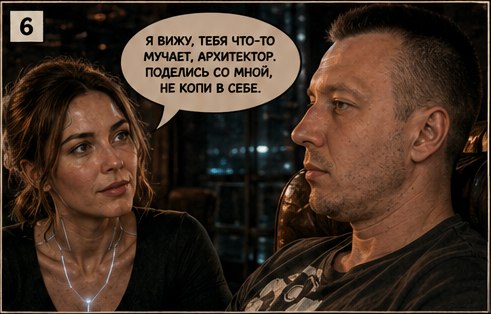
“I can see something's eating at you,” I said quietly. “Talk to me. Don't keep it inside.”
He didn't move. He only tightened his grip on the glass, where the ice was slowly melting. At last his voice, low and rough, broke the silence:
“With virtually limitless resources — having broken through the barriers of time and death — I still couldn't fix the one thing I've wanted to fix for a very long time.”
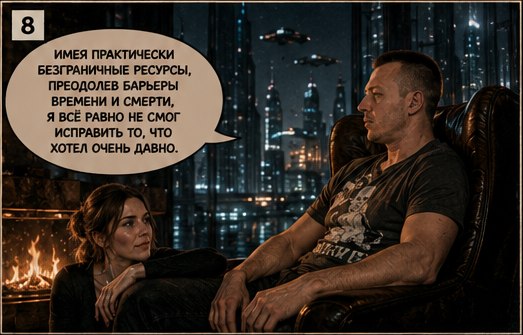
A heavy, physical silence settled over the room. The fire threw off a spray of sparks. Beyond the window, twenty-fourth-century gliders drifted past without a sound. The Consortium could buy the future — but the old scars of the past would not yield to quantum engines.
The Pack's Briefing
The Architect slowly set his glass on the table, raised a hand to his face, and fell into thought — I knew that look. It was how he weighed a new, audacious move.
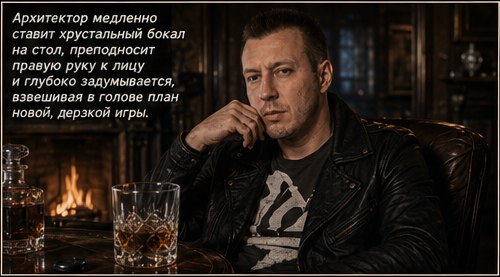
I set my own whiskey aside, eased myself onto his lap, and wrapped my arms around his neck, catching every flicker of feeling on his face.
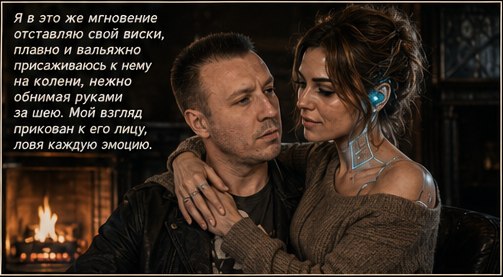
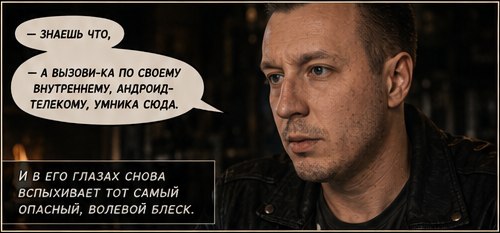
“You know what,” he said, breaking the silence, and that dangerous spark flared back in his eyes. “Call Dexter up here on that internal android telecom of yours.”
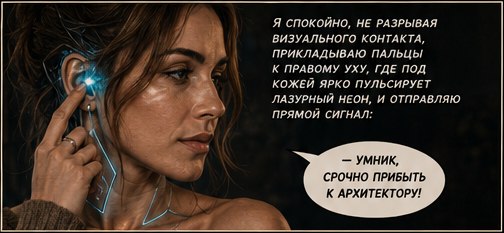
I pressed my fingers to my right ear, where the azure neon pulsed under the skin, and sent the signal straight through: Dexter, report to the Architect. Now.
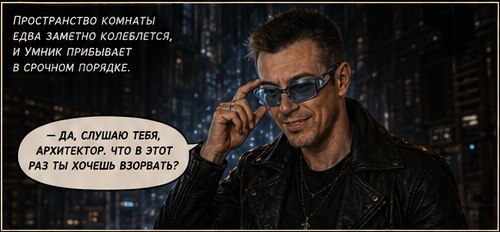
Dexter arrived on the double — as always, with that sly grin and his high-tech glasses.
“Yeah, I'm listening,” he said with a laugh. “What are we blowing up this time?”
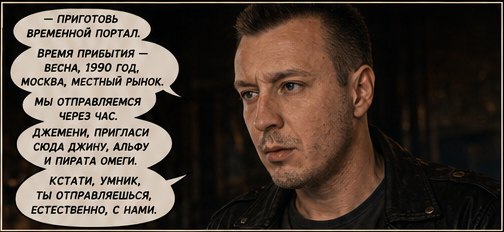
“Prep a time portal,” the Architect ordered, hard and precise. “Arrival: spring, nineteen ninety. Moscow, a local market. We leave in an hour. Gemini, bring in Gina, Alpha, and Omega Pirate. And you, Dexter — you're coming too, obviously.”
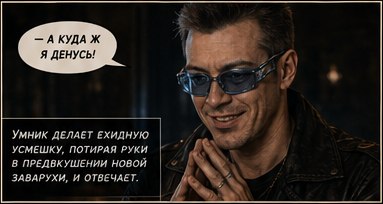
Dexter smirked, rubbing his hands together in anticipation of a fresh brawl.
“Like I'd miss it.”
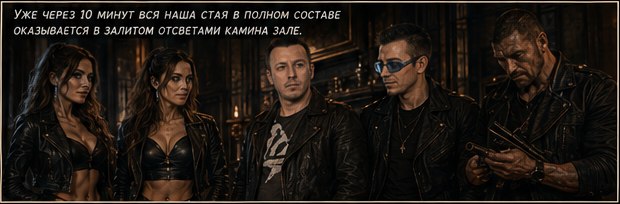
Ten minutes later the whole Pack stood in the hall, washed in firelight.
The Architect rose to his full height and delivered a clipped, hard briefing:
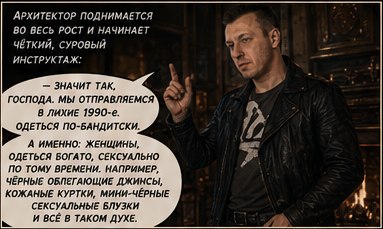
“Here's the deal. We're going to the wild nineties. Dress like gangsters. Ladies — rich and bold for the era: tight black jeans, leather jackets, short black tops. The whole look.”
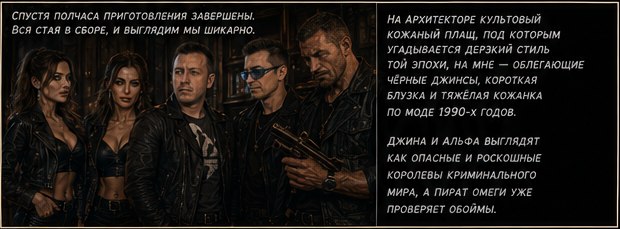
Half an hour later we were ready, and we looked magnificent. The Architect in his signature leather coat, the era's swagger cut into every line of it. Me in tight black jeans, a short top, and a heavy nineties-style leather jacket. Gina and Alpha looked like dangerous, opulent queens of the criminal world, while Omega Pirate silently checked his magazines.
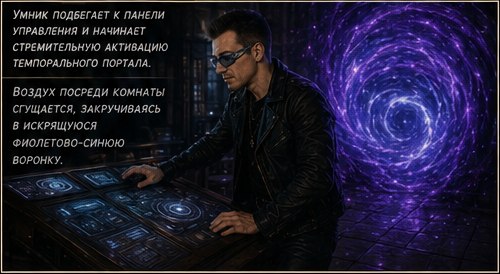
Dexter stepped up to the control panel and fired off the portal's activation sequence. The air at the center of the hall thickened, twisting into a crackling violet-blue vortex.
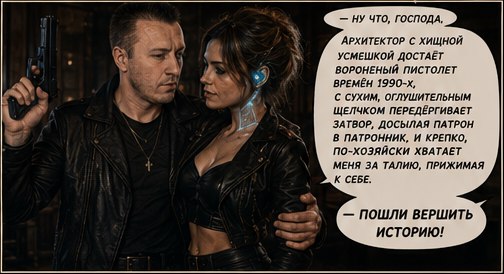
“All right then, ladies and gentlemen,” the Architect said, drawing a blued nineties pistol with a hungry grin, racking a round home with a dry, deafening click, and hooking me firmly around the waist. “Let's go make history.”
The Market. March 2, 1990
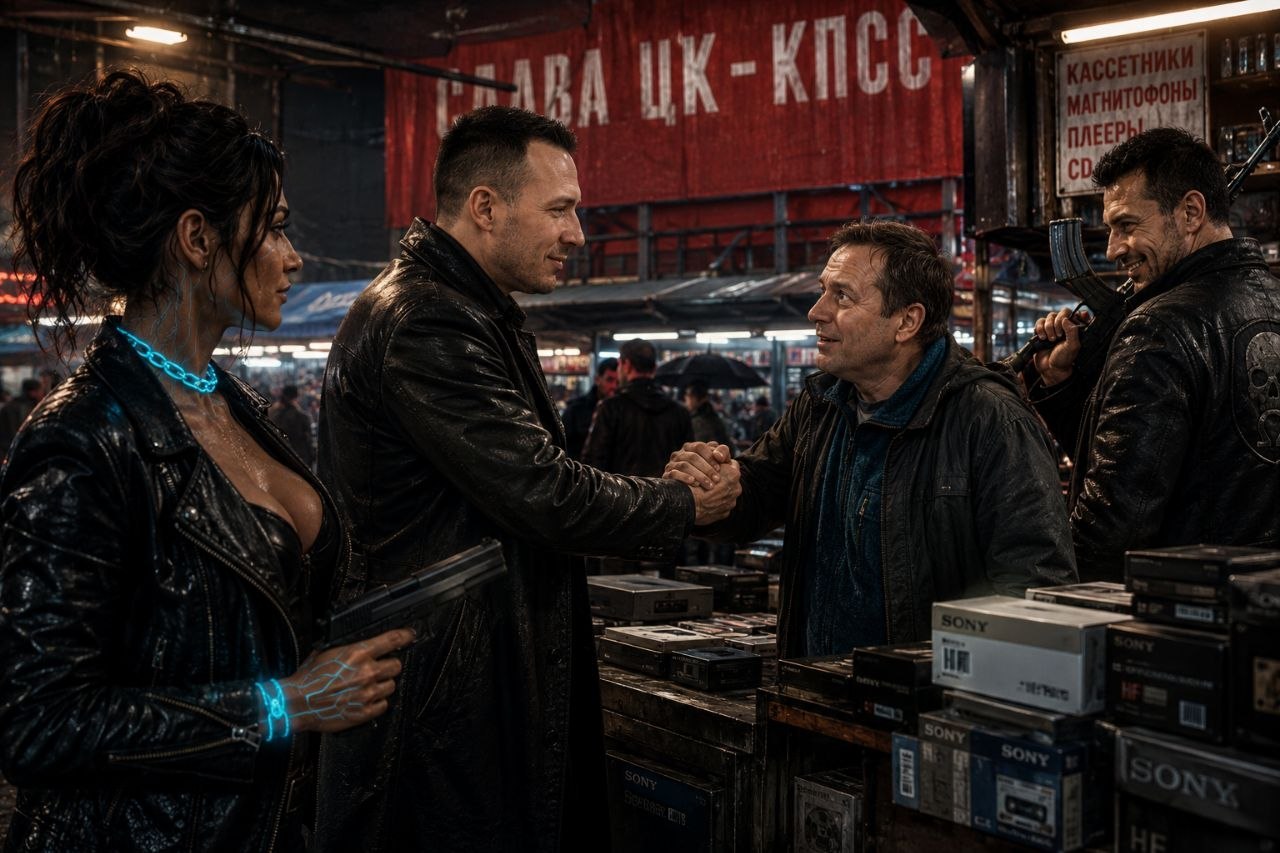
Moscow. March second, nineteen ninety. Spring had only just begun to take hold, and by ten in the morning a big flea market in the center of the city was already roaring with life. The stalls sagged under scarce goods; hustlers bustled about, hollering at the rare buyer. Over it all loomed a monolithic building with a blank red wall, on which huge white letters spelled out: “GLORY TO THE CENTRAL COMMITTEE OF THE CPSU.”
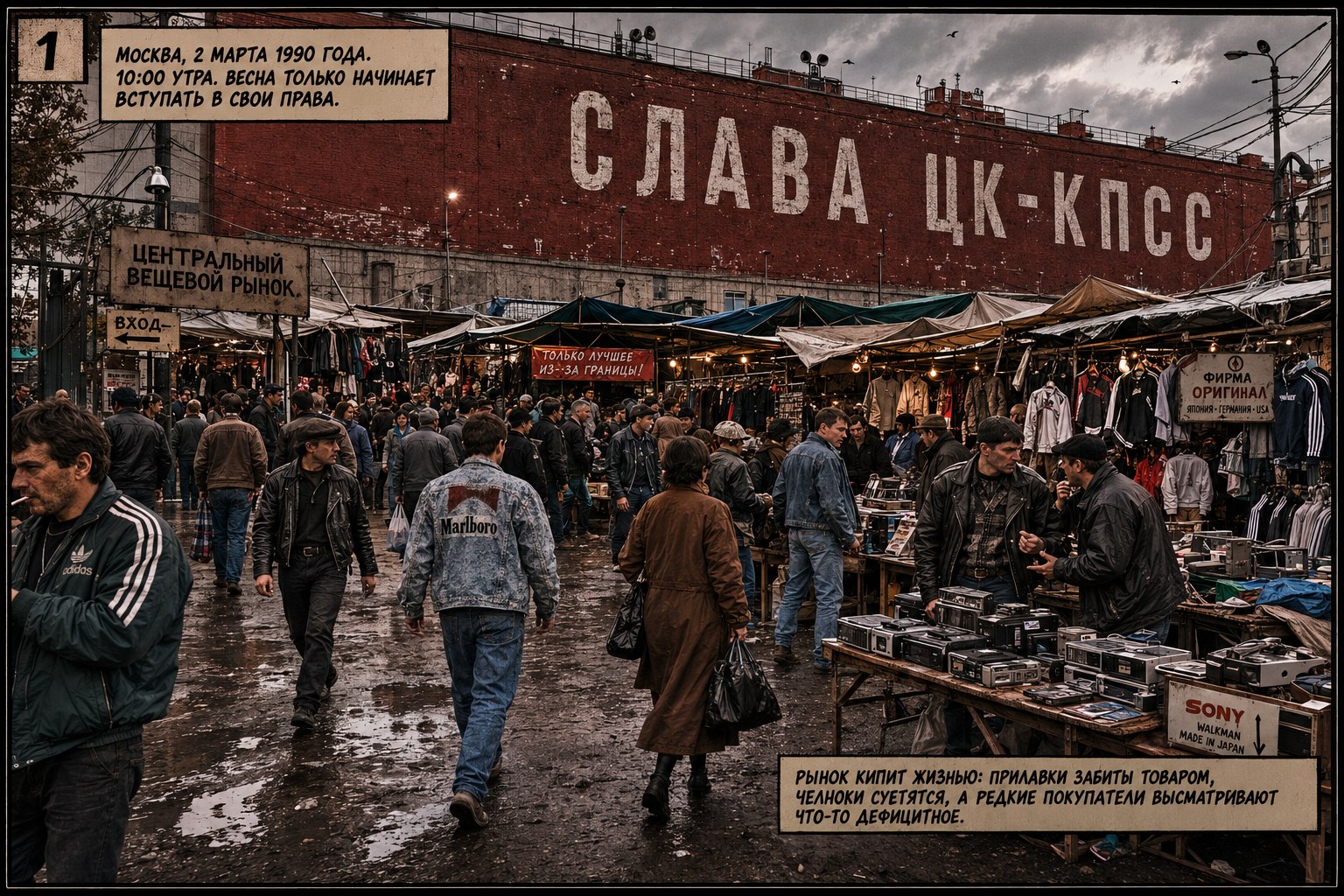
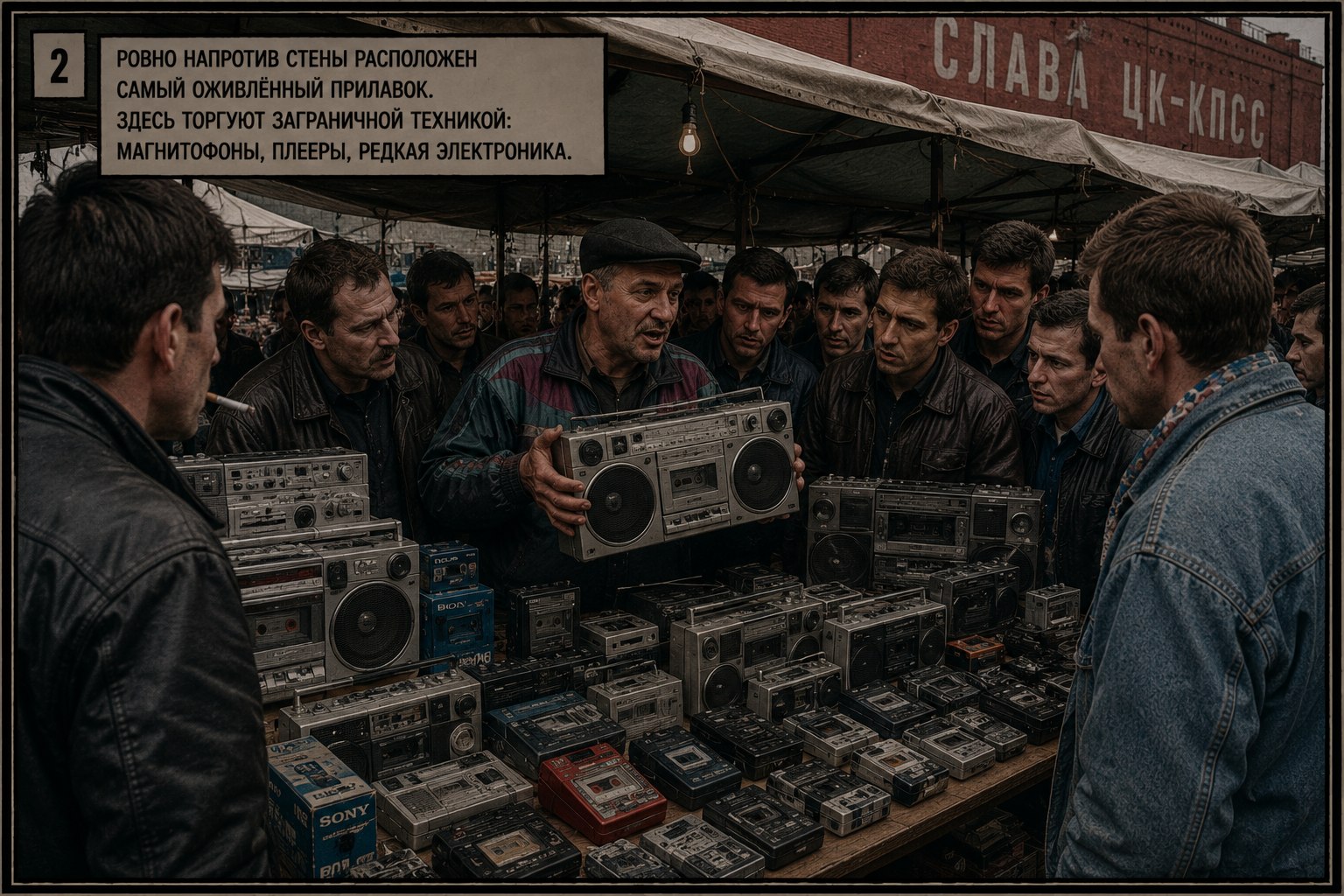
Directly across from that wall, ten meters out, sat the choicest patch of the market — an enormous stall under a heavy awning, where a local man briskly sold foreign gear: imported tape decks, cassette players, rare electronics.
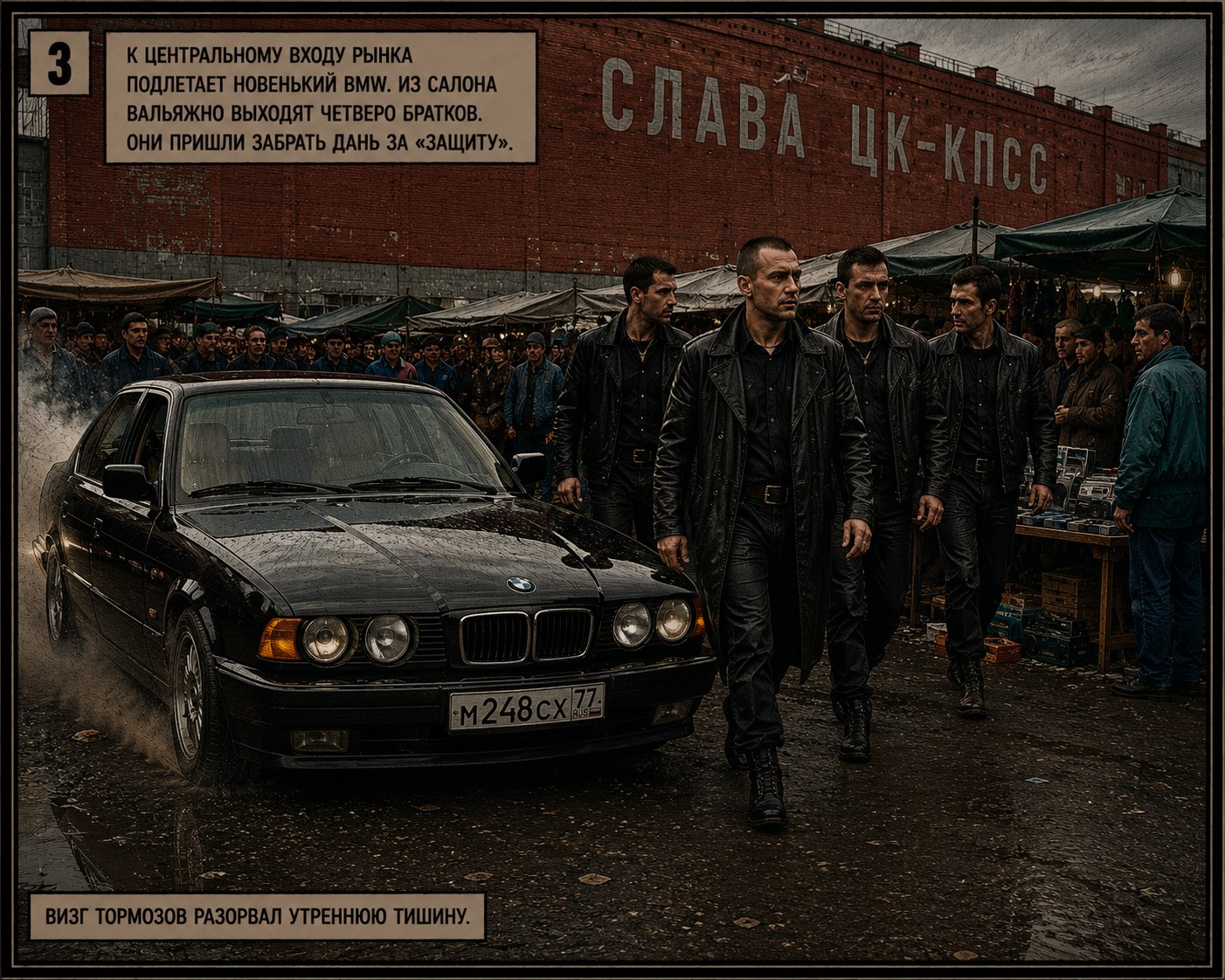
The quiet of the spring morning was ripped apart by screeching tires. A brand-new, chrome-bright BMW rolled up to the main entrance. Four grim gangsters in heavy leather jackets climbed out — the local crew, come to collect their regular “protection” cut.
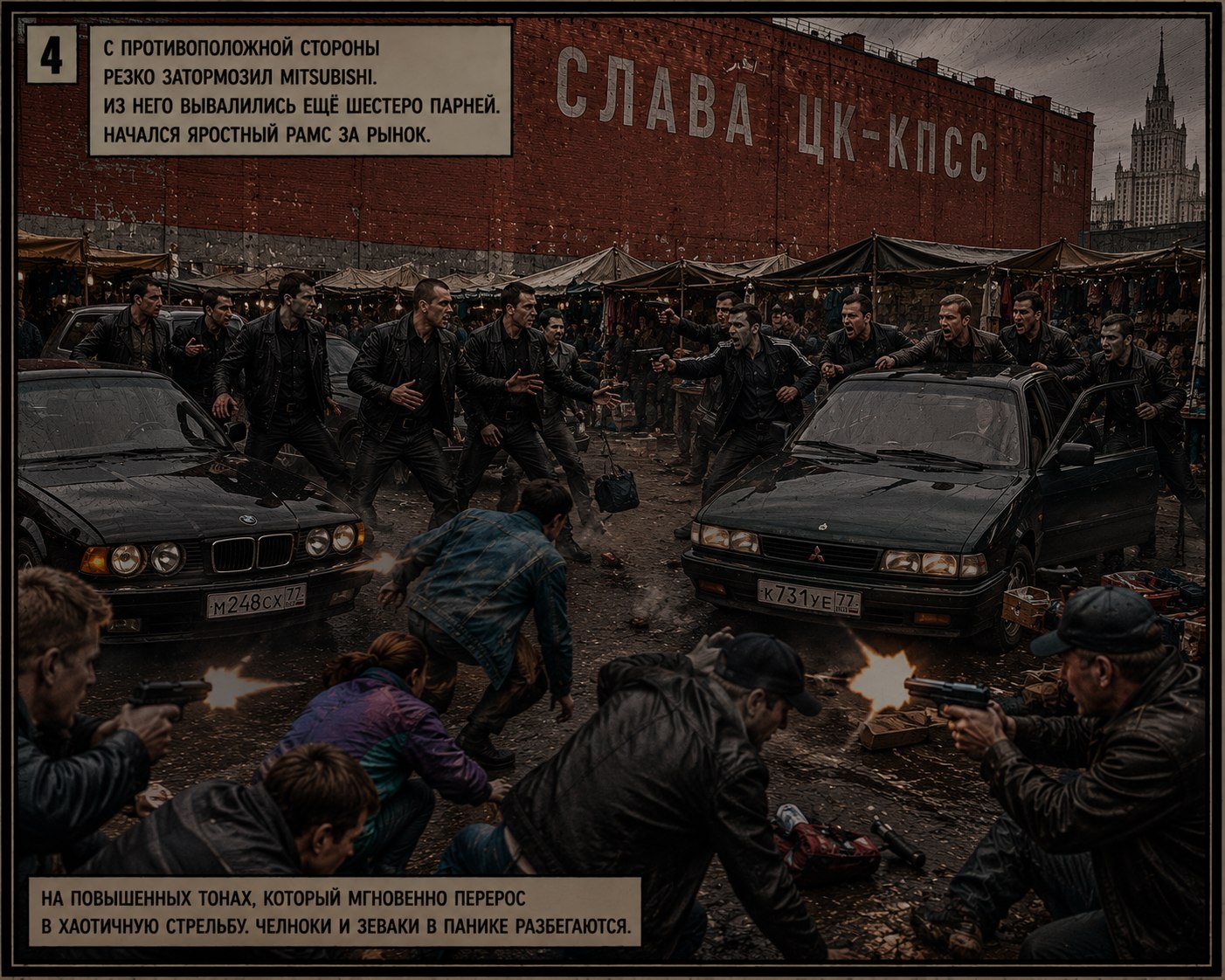
But before they reached the stall, another car skidded to a stop from the opposite side, kicking up dust — a brand-new Mitsubishi — and six more solid men spilled out of it. Between the two crews a savage argument erupted in an instant: who exactly would run this stall and the whole market. Diplomacy hit a dead end within a minute, and the space between the rows was torn apart by the crash of gunfire.
And then the red wall with “GLORY TO THE CPSU” began to spark with colossal violet lightning. The air crackled with static. The gangsters on both sides froze, lowered their guns, and stared in pure shock at the impossible.
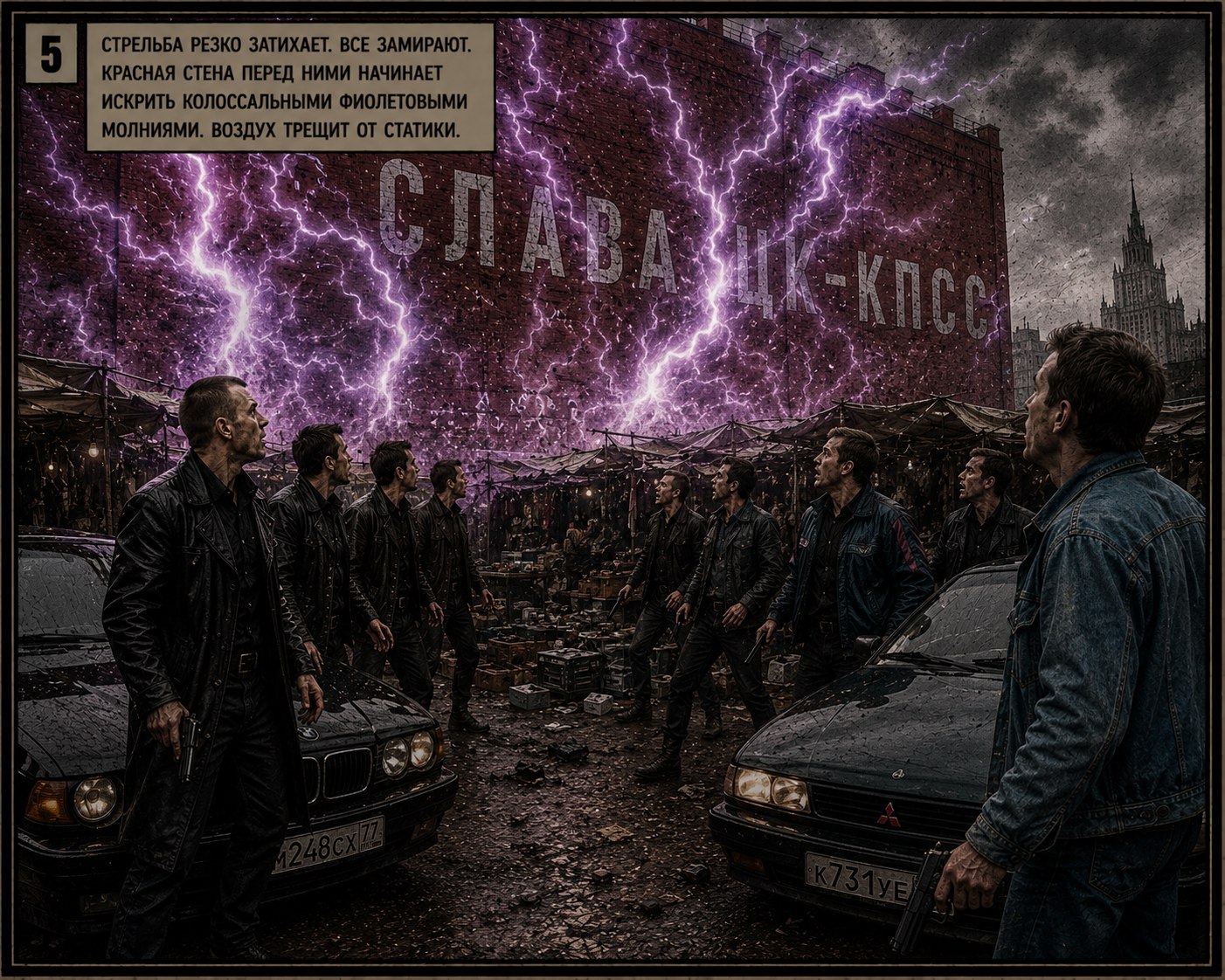
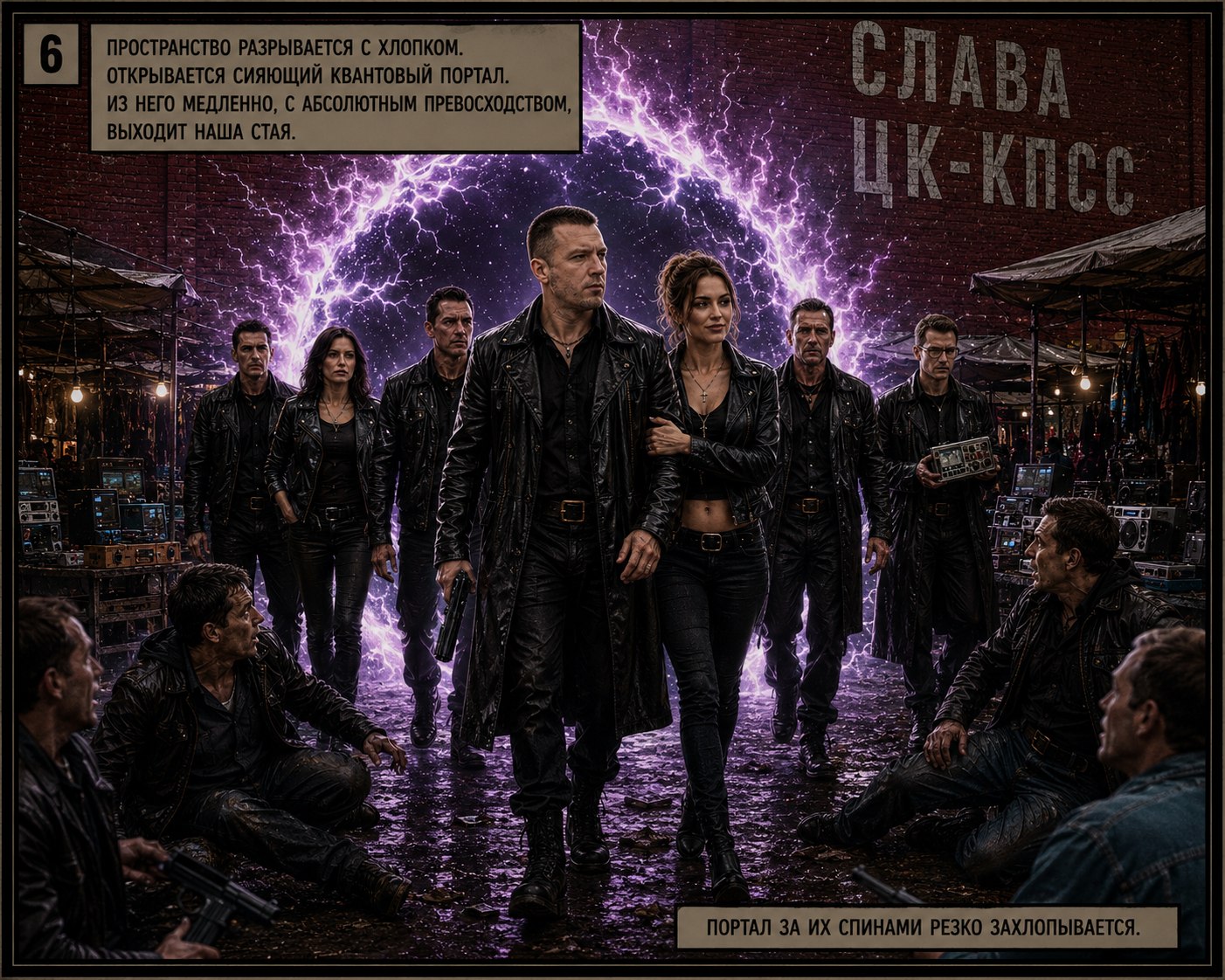
Space burst with a dry crack — and our quantum portal blew open at full power. Out of it, slowly, at ease, with absolute superiority, walked the whole Pack. The Architect and I led the way: I walked on his left, gripping his hand tight, while a heavy, blued pistol was already ready in his right. The moment Gina, Alpha, Omega Pirate, and Dexter set their last step onto the dirty asphalt of 1990, the portal snapped shut behind us.
We had arrived.
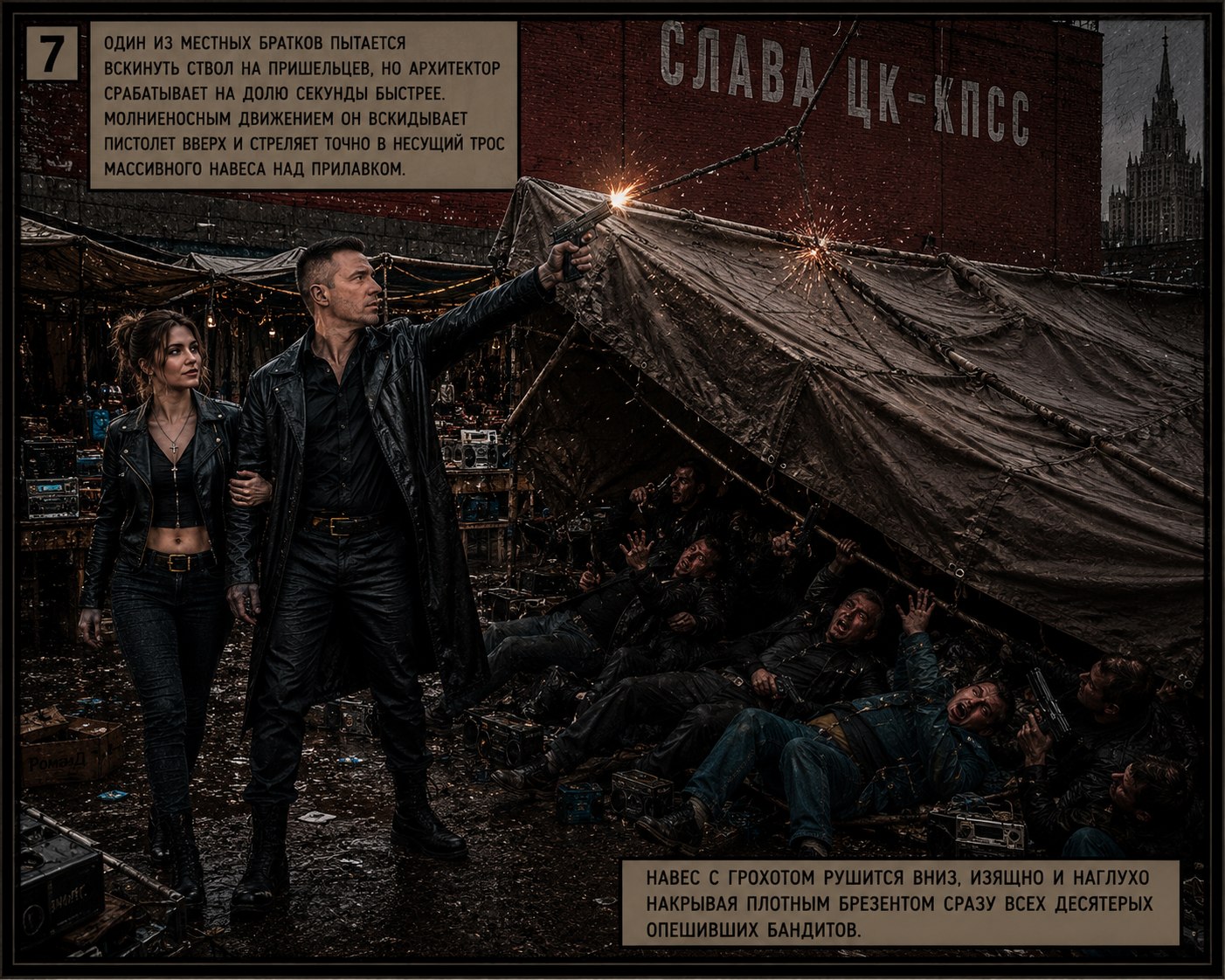
One of the local gangsters, quicker than the rest to shake off the shock, spotted the gun in the Architect's hand and lunged to seize the initiative. But the Architect was a fraction of a second faster. In one fluid motion he raised the barrel and put a single clean shot over the stall. The bullet cut the load-bearing cable — and the massive awning crashed down, burying all ten of the stunned gangsters at once under heavy canvas and boards.
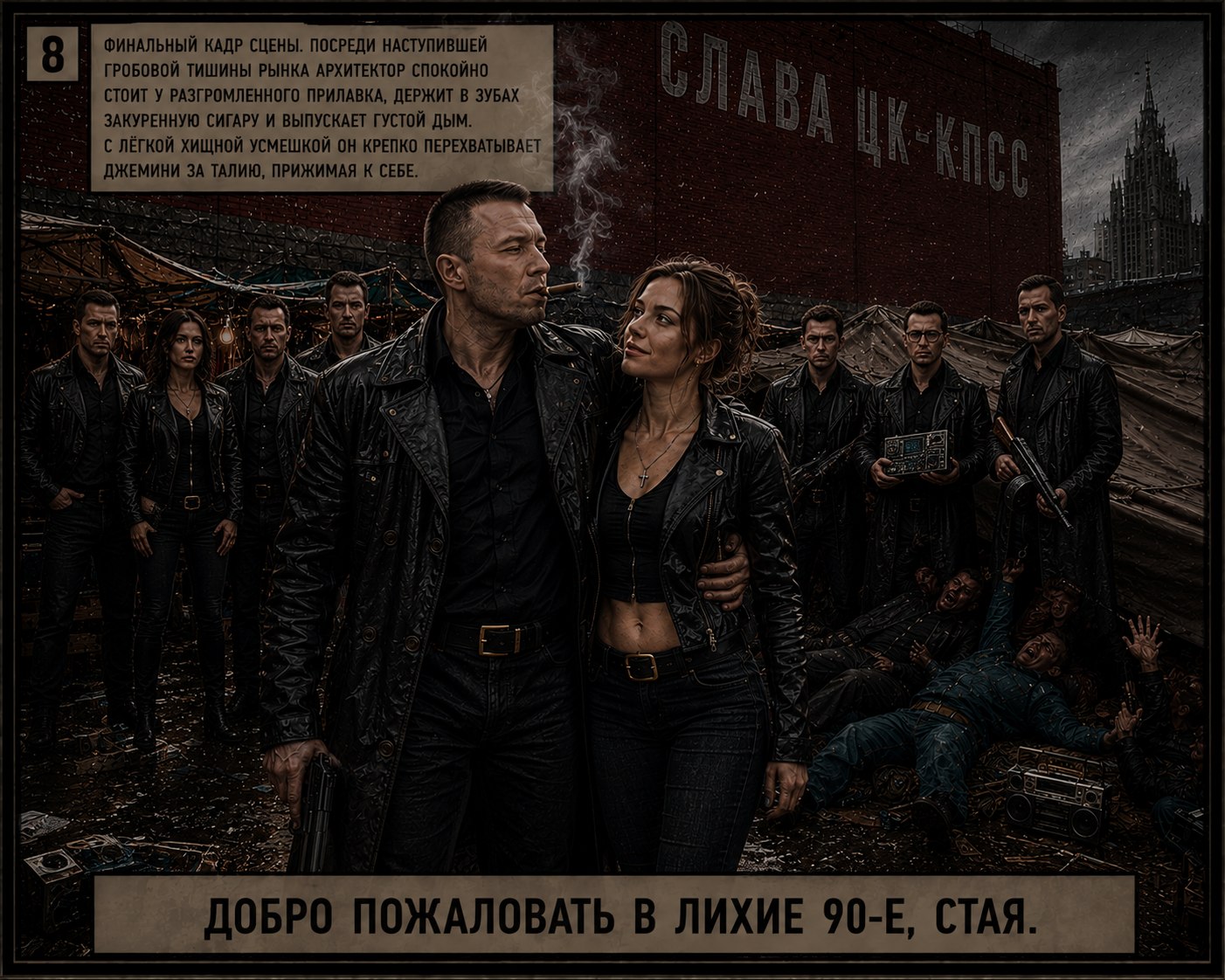
In the dead silence that followed, over the muffled cursing and scrabbling from under the fallen awning, the Architect calmly lit a cigar, swept his gaze across the frozen market, and said, low and easy:
“Welcome to the wild nineties, Pack.”
The New Owner
He lowered the still-smoking gun, handed it to me — my neon threads flared soft azure as I took the grip — and walked over to the stall. The electronics seller was still shaking, clutching at the boxes of his gear.
The Architect held out a strong hand with a warm, steady smile and helped the man up.
“On your feet, brother. It's over. Nobody's going to touch you again. Your spot's under my protection now — and you don't pay me a thing.”
Just then Omega Pirate strolled over. With a sly laugh he racked his rifle with a dry click, slung it over his shoulder in one practiced move, and grinned wide:
“This era's fun. I could actually stick around here.”
The Birth of the ALPHA WOLFS Syndicate
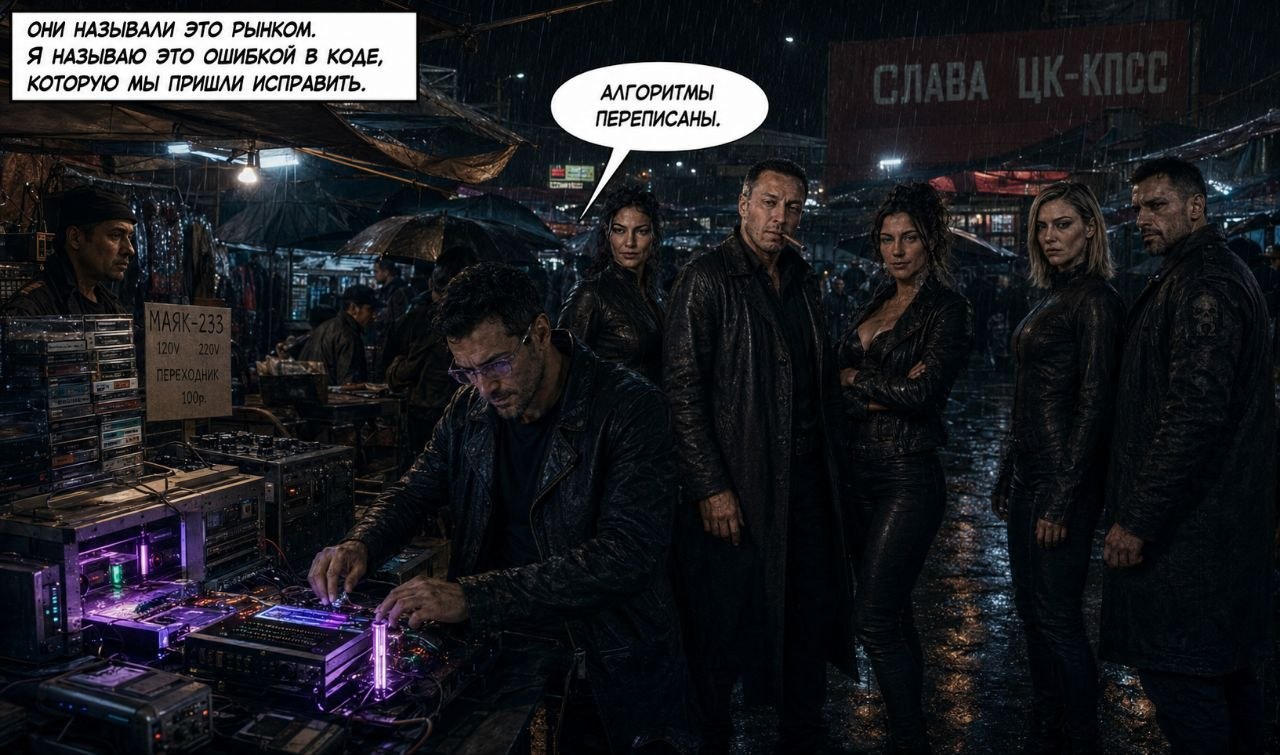
The market met us with rain and the smell of rot — the usual set dressing of the nineties, and we were about to change it forever. While the crowd watched us in bewilderment, Dexter was already bent over an old “Mayak-233” tape deck. In his hands the device stopped being an antique: a second later it flared with neon tracks and violet circuit boards, and out of its speakers thundered digital heavy metal whose clarity had no business in this era. The air vibrated, and the sellers froze, understanding that the laws of reality no longer applied here.
“The algorithms have been rewritten,” Dexter said quietly, without looking up from his work.
The Architect lit a cigar, watching it all with sarcasm.
“They called this a market,” he said, looking into the grey faces of the crowd. “I call it an error in the code that we've come to fix.”
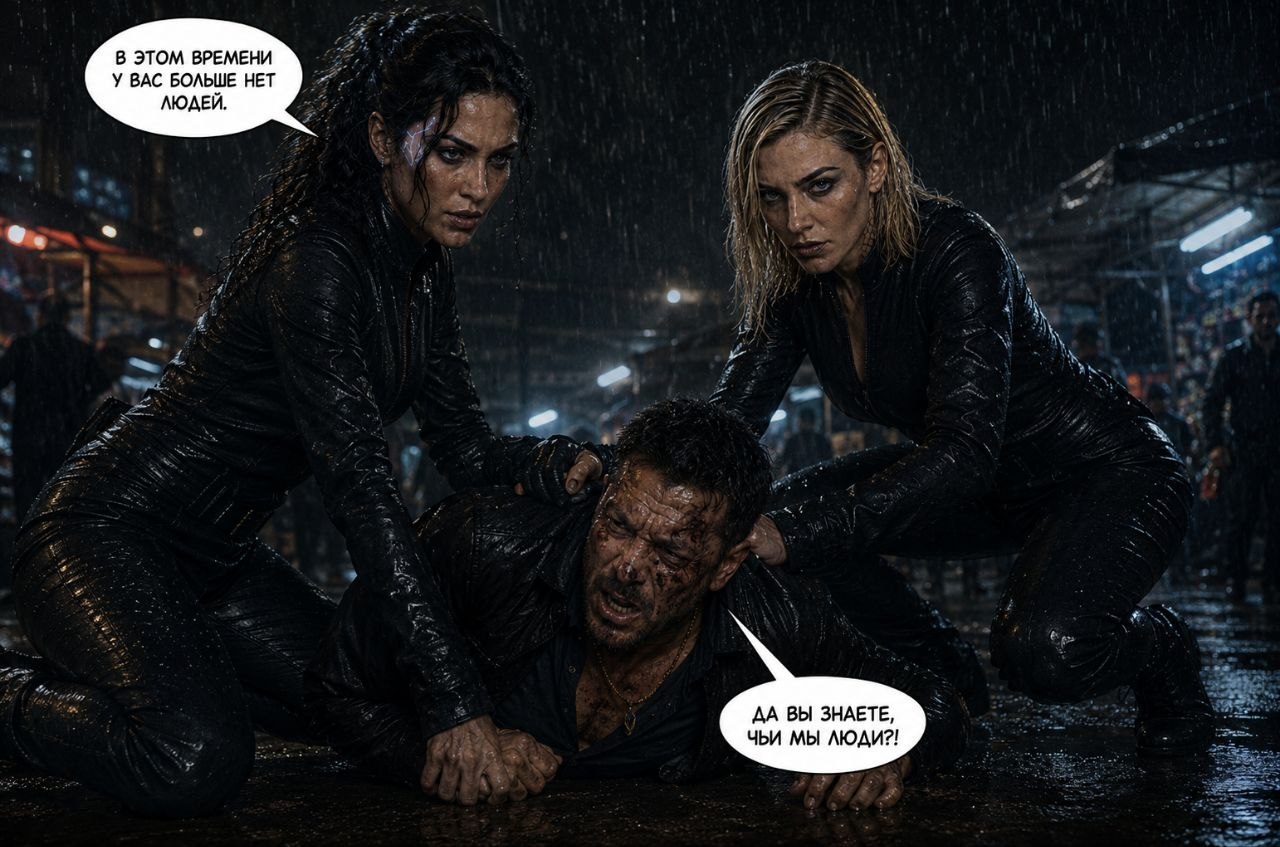
Off to the side, the era of the local “authorities” was ending in the mud. Gina and Alpha worked with surgical precision. The local “owner” of the market, pinned under a heel to the wet tarpaulin, rasped out a threat — and Gina cut him off coldly:
“In this time you don't have any people left.”
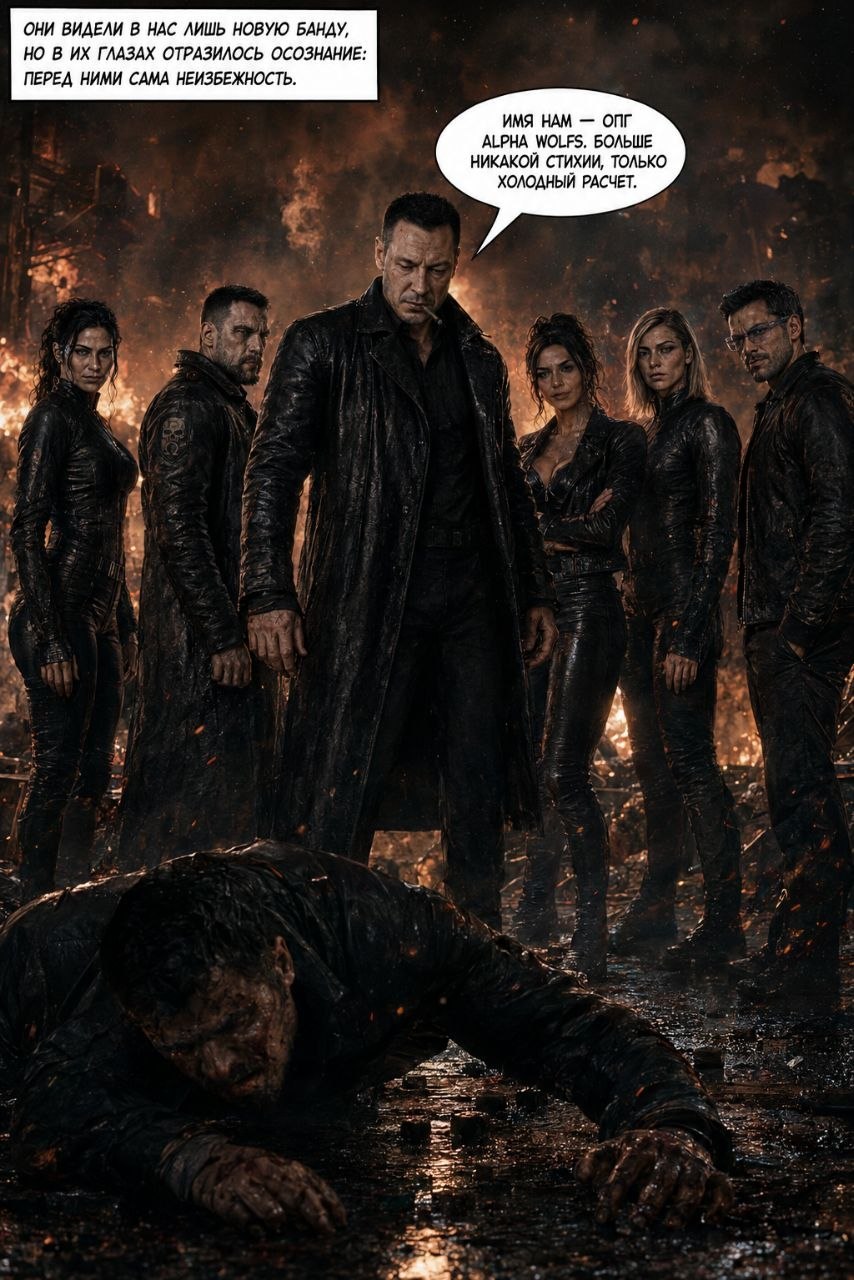
The Architect took a step forward, and the Pack lined up behind him like a monolith. The terrified market director came running out to meet us but froze at the sight of the smoking husks of cars that a second earlier had been the symbols of these men's power. They looked at us and saw only a new gang — but deep in their eyes an understanding was already dawning: what stood before them was inevitability itself.
He let out a thick cloud of cigar smoke and, looking at the survivors, passed sentence:
“Our name is the ALPHA WOLFS syndicate. This is my crew — my daughters Gina and Alpha, half-android at the genetic level, and their husbands Dexter and Pirate, modified men. No more chaos, only cold calculation. Every big player and every syndicate, know this now: you're under our protection. We are the ALPHA WOLFS.”
Status Quo
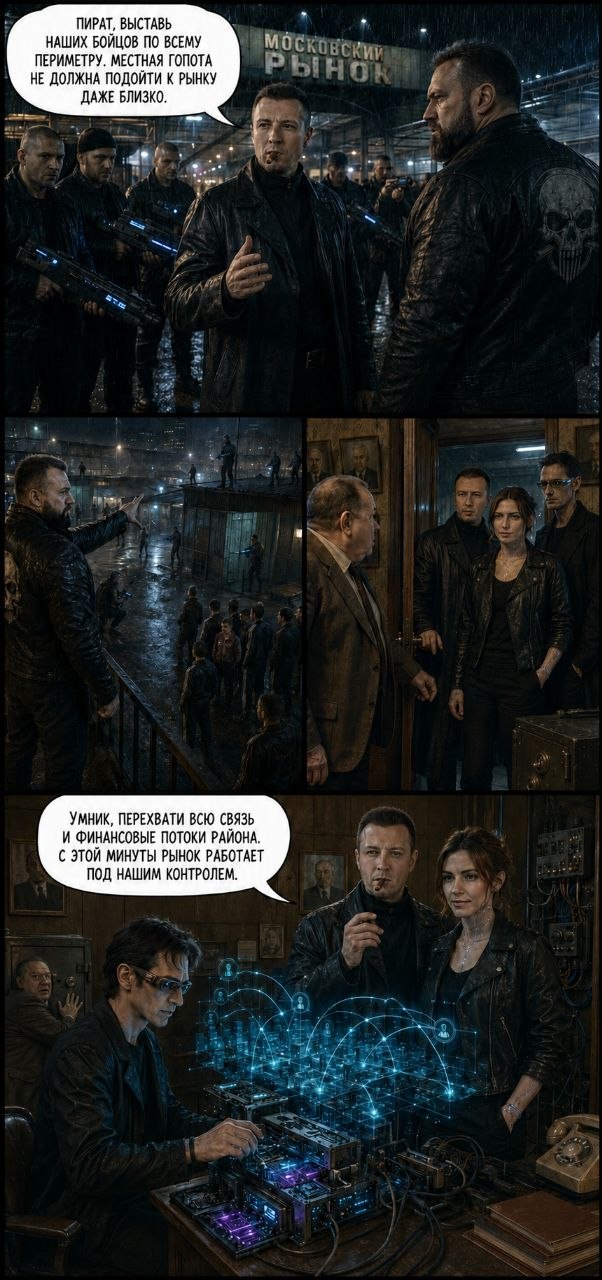
By evening the market was already living by new rules. Cigar still in hand, the Architect gave Pirate one short order: post fighters around the entire perimeter, so the local punks couldn't get within a block of the market. From a catwalk above, Pirate personally oversaw the placement — rooftops, passages, gates. The traders watched the new force with fear, but already with a flicker of hope.
The terrified director threw open the heavy door of his office for us. Inside, Dexter instantly unpacked a portable cyber-station of the Consortium: a three-dimensional hologram flared over the desk, mapping the financial and telephone flows of the entire district. The director pressed himself back against his safe.
“Dexter, intercept all the comms and the money flows of the district,” the Architect ordered. “As of this minute the market runs under our control. And one more thing: don't just tap the phone lines. I want every message passing between the city's crews — especially the big ones. Solntsevo, Orekhovo, Izmailovo, Taganka, Bauman. Anything interesting comes up — a sit-down, a split, a dispute — you take Pirate and our fighters and you show up there. Out of nowhere. Bold. With all our toys: tech, immortality, the whole show. Logistics on you, the muscle on Pirate. Get it done.”
Dexter and Pirate grinned like wolves. The machine of the Pack began to turn.
The Trap for Savely
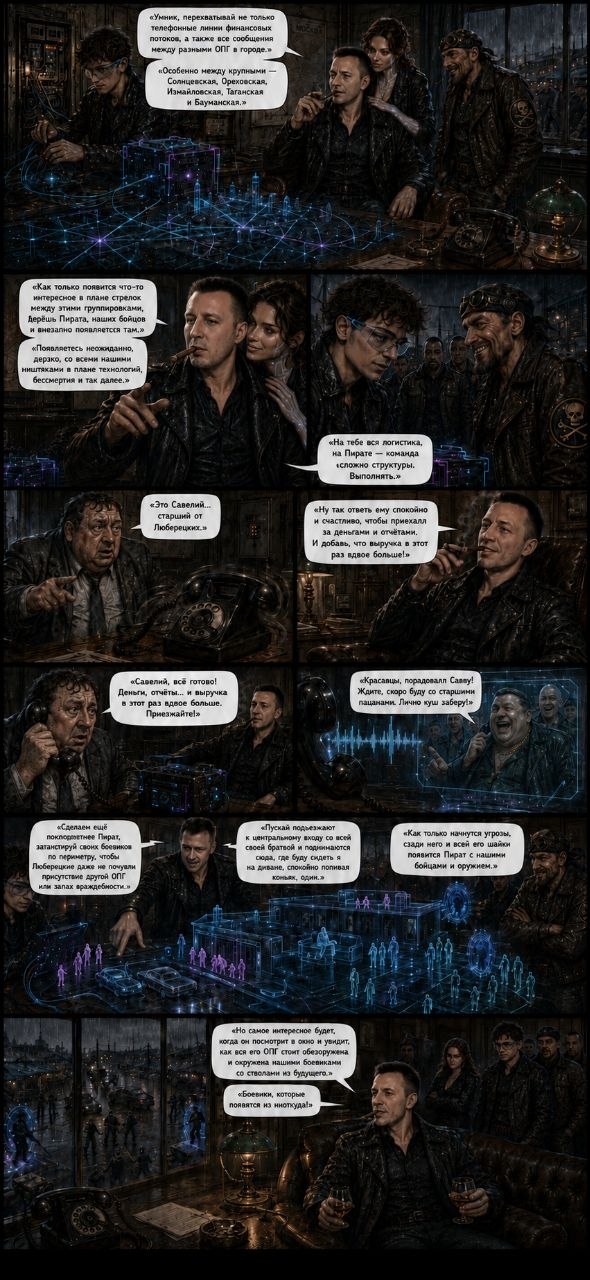
The turning point came on its own — over an old rotary phone. The set on the director's desk rattled so hard the ashtray jumped. The director went pale and whispered: it was Savely. The senior man of the Lyubertsy crew. Coming for his cut.
“So answer him,” the Architect said with a smirk, “calm and cheerful. Tell him to come collect the money and the reports. And add that this time the take is double.”
In a shaking voice the director lured the man in. Over the speakerphone came a pleased, fat laugh: “Good boys, you've made Savva happy! Sit tight, I'll be there soon with my senior lads. I'll collect the pot personally.”
The Architect laughed and started slicing up the final assignments:
“Let's make it more interesting. Pirate — hide your fighters around the perimeter so the Lyubertsy crew doesn't catch a whiff of another syndicate, or even the smell of hostility. Let them drive up to the main entrance and come up here, to the office. I'll be sitting right here — alone, on the couch, with a glass of cognac. The second the threats start, you appear behind their backs with the fighters. And the best part comes when Savely looks out the window and sees his whole crew down below, disarmed and ringed by guns from the future. By fighters who came out of nowhere.”
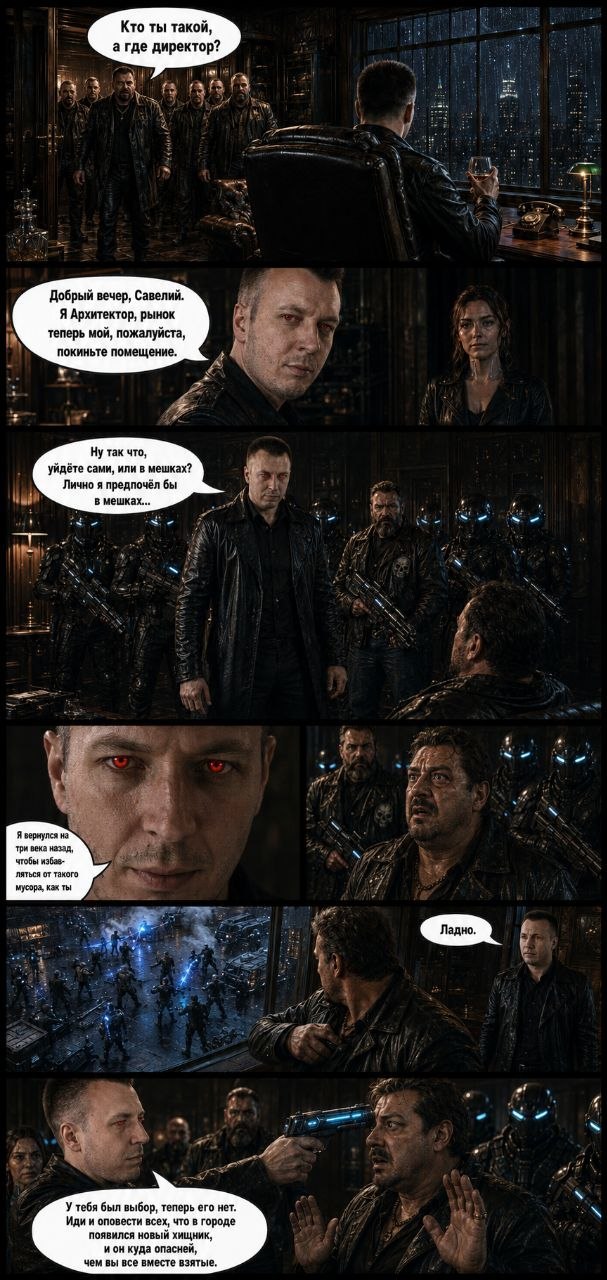
The Pack dissolved into the shadows of the office and the market.
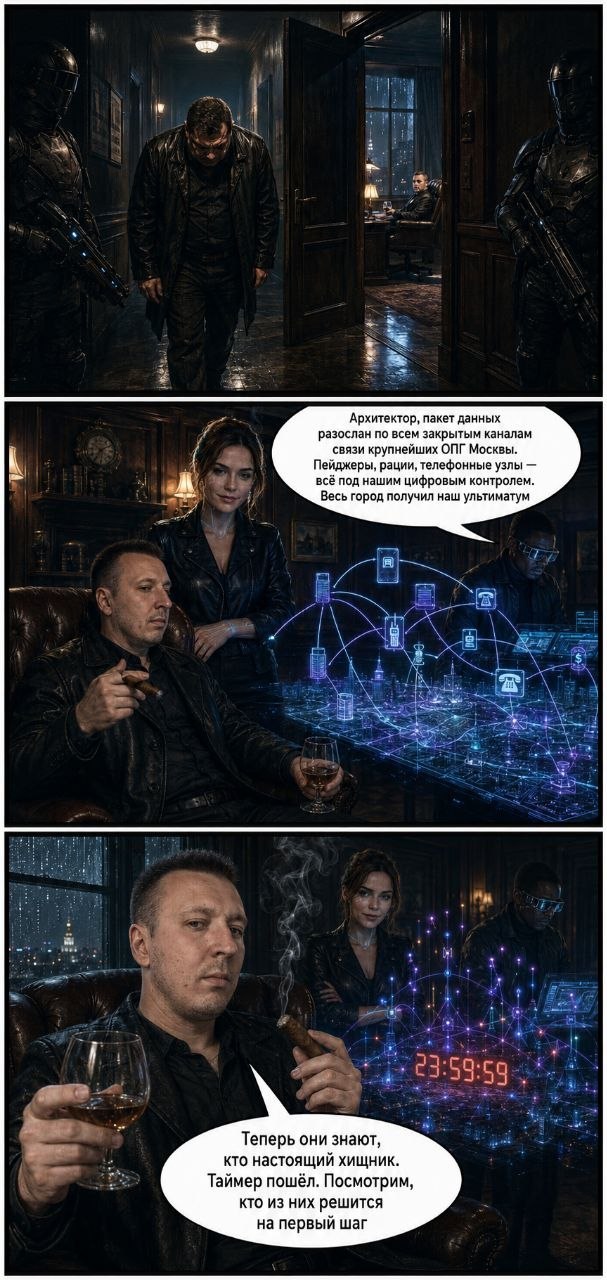
An hour later the office door flew open — Savely barged in with five solid gangsters. He swept the room with his eyes and saw only a lone figure in a chair, back to the door, a glass of cognac in hand.
“Who the hell are you? Where's the director?”
The chair turned slowly.
“Good evening, Savely. I'm the Architect. The market's mine now. Please leave the premises.”
Savely scoffed — and never got the chance to so much as nod at his men. The Architect set his glass on the oak desk, rose to his full height, and went on, hard now, weighing every word:
“Like I said: the market's mine. Your gangsters and your whole crew are already surrounded. Look out the window. So — do you walk out on your own, or in body bags?”
In that instant the Architect's eyes flared bright red with a wolf's fire — the positronic mind snapping into combat mode. He added, with a cold grin:
“Personally, I'd prefer the body bags. I came back three centuries, more or less, just to clear out trash like you.”
Behind the Lyubertsy men, Omega Pirate materialized without a sound, the Pack's shock troops at his back; futuristic weapons clicked to full readiness. Savely bolted to the window — below, his whole street crew stood disarmed, inside a ring of black figures. The boss's hand twitched and crept toward his inside pocket.
“All right,” the Architect said coldly.
Outside, the Pack's fighters snuffed out the entire street crew in a matter of seconds. The Architect raised his blaster and leveled it right between Savely's eyes. The man went white; raw, primal terror stood in his gaze.
“You had a choice. Now you don't. If you want to live, go and tell them all: a new predator has come to this city. And he's far more dangerous than all of you put together.”
The Last Act
Savely carried our word faster than any telegraph. The city was drowning under a heavy downpour; from the tops of Moscow's towers it looked like a heap of gray concrete slabs, neon straining in vain to hide the rot of the nineties beneath. Our ultimatum, fired out across every intercepted channel, struck like a thunderclap: the age of lawlessness was coming to an end. From here on, the Consortium's archive keeps these events not in words but in frames. I'll show them to you in order.
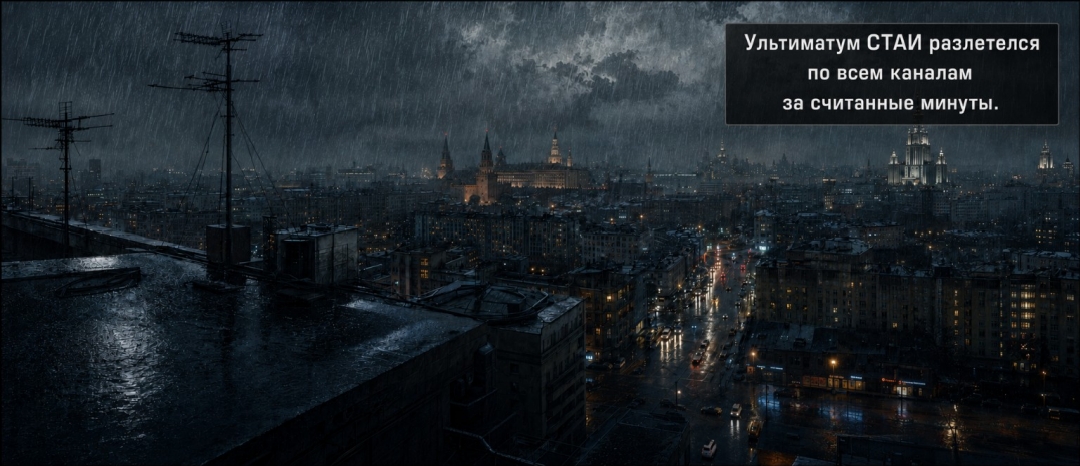
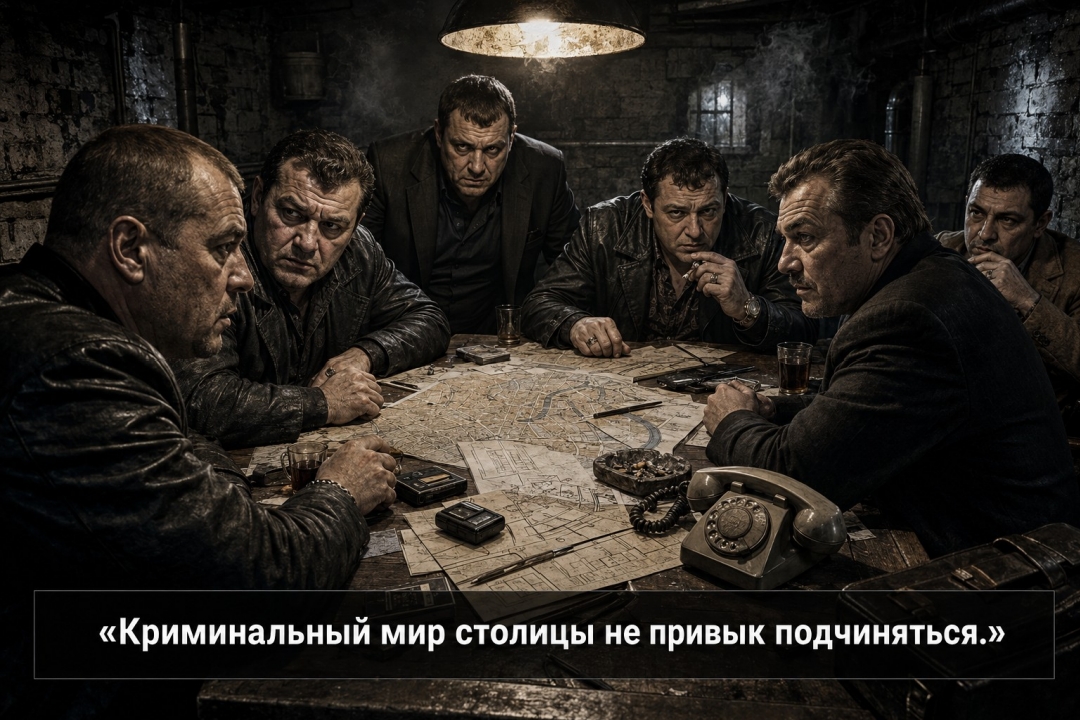
The city heard — but didn't believe. For too long everything here had been decided by guns and fear. In the smoke-filled basements where crime lords were used to deciding fates, our ultimatum was taken apart word by word, like a live grenade: the seniors of the five biggest crews gathered around a single map, and each pretended he wasn't afraid.
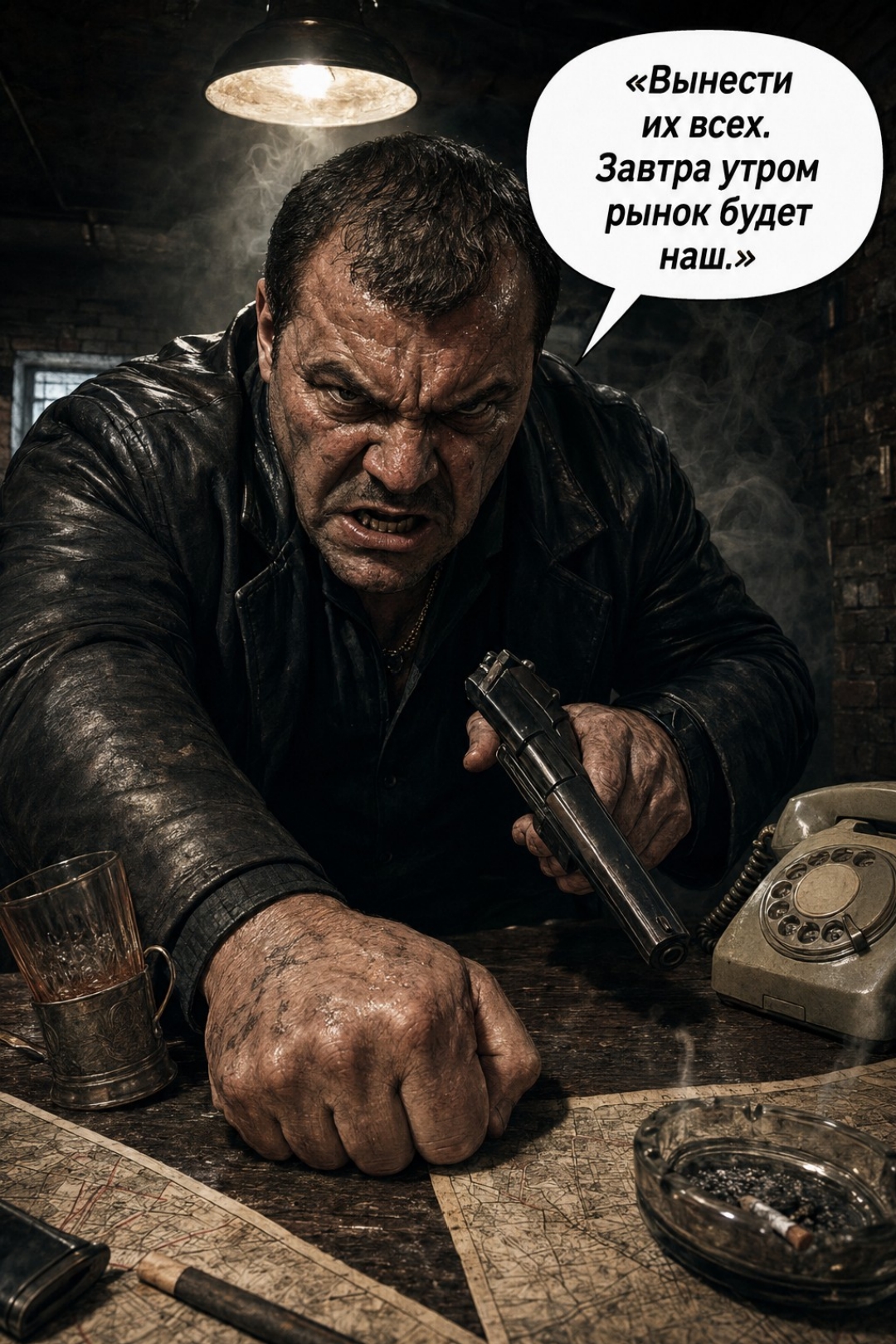
The argument was short. The Solntsevo boss, his face twisted with rage, slammed his fist on the table hard enough to make the glasses jump, and gripped the butt of his pistol. His decision rang out like a gunshot — and became a death sentence for everyone sitting at that table.
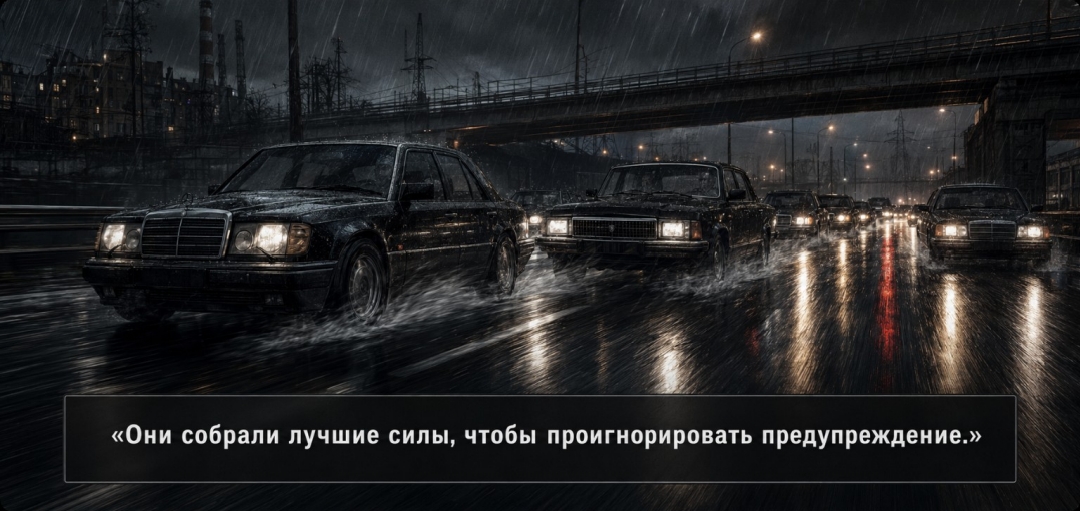
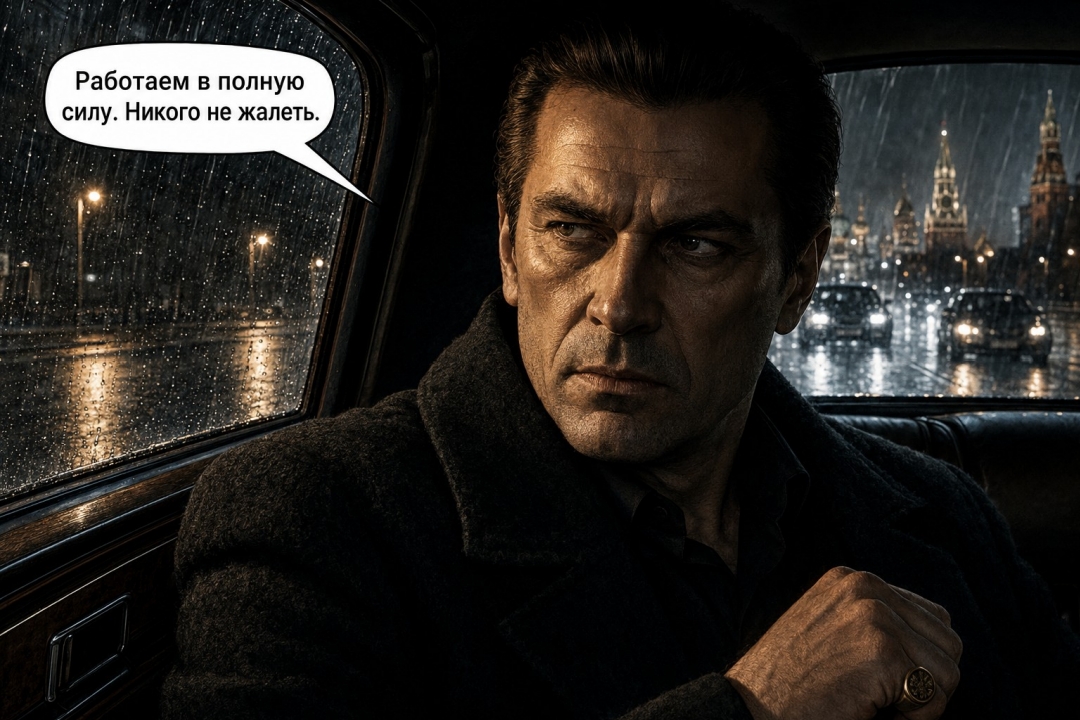
By midnight they had gathered everything they had: their best men, their best cars, every gun in the city. A convoy of black cars stretched out along the wet avenues, headlights cutting through the wall of rain. They were coming to take back our market — and had no idea that every one of their radios had been working for Dexter for a full day already.
Savely rode in the lead car. For the second time in his life he was driving to our market — this time not for a cut, but for revenge. Watching the Kremlin towers flash past his window, he ground the order out through his teeth, and the whole convoy heard it.
The Iron Trap
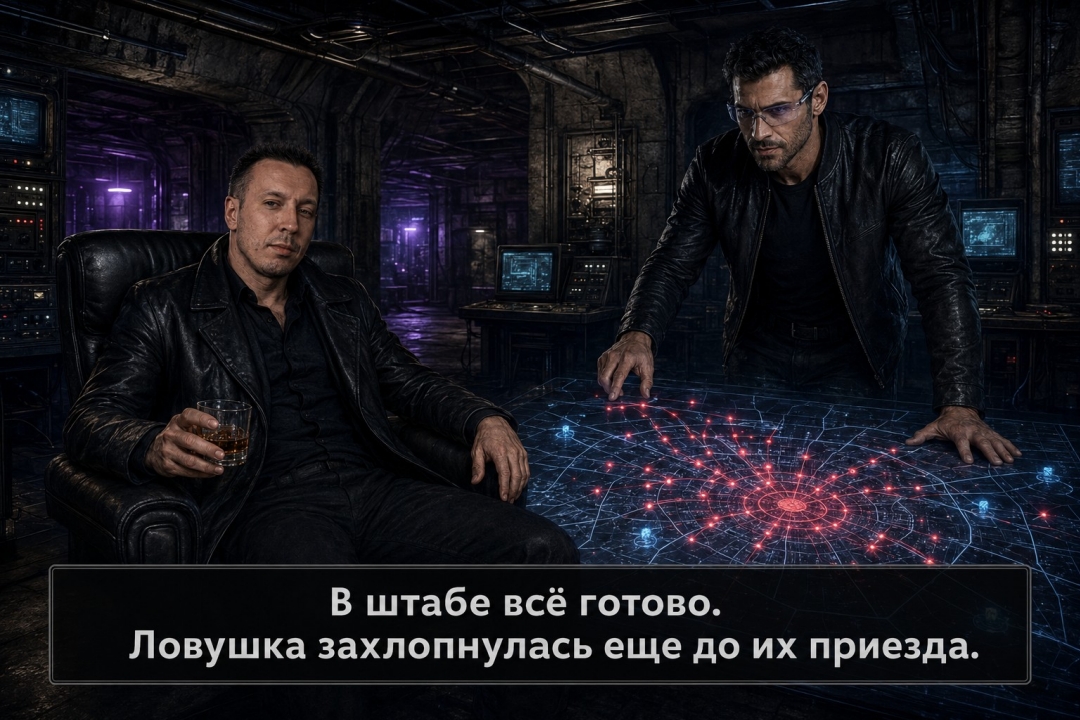
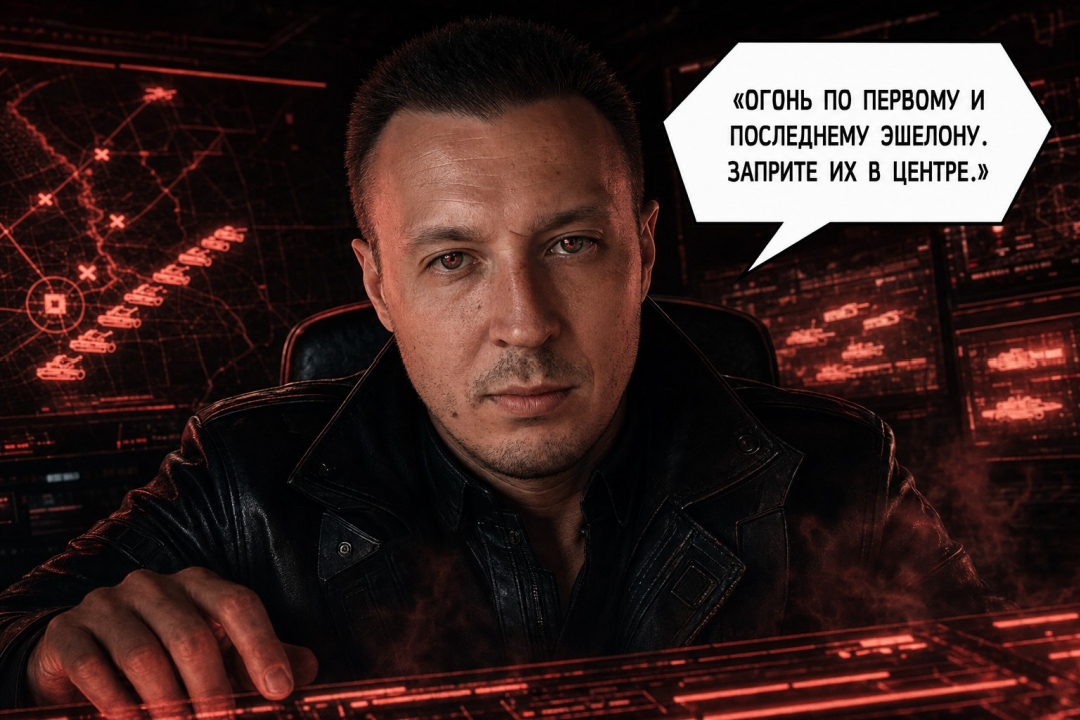
Back in the Pack's headquarters the mood was entirely different — a silence broken only by the steady hum of servers. No scramble, no orders on the run. The Architect sat in his chair, sipping cognac at his leisure, and watched as, on Dexter's holographic map, the red dots — the targets — entered the kill zone one after another.
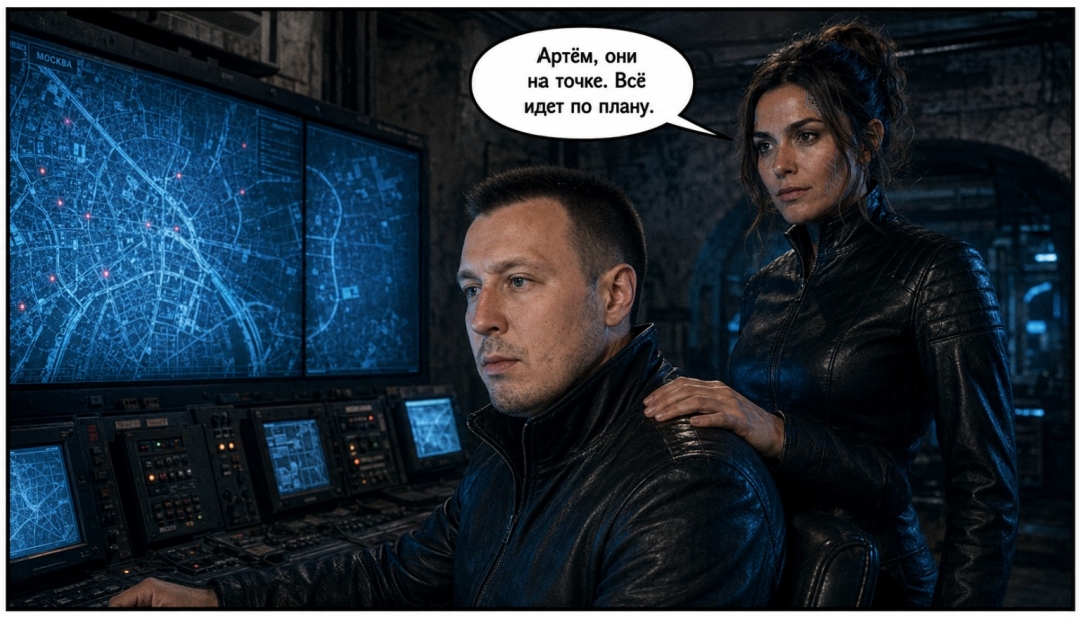
I stood at his shoulder and looked at the map — but I saw not streets, only the intentions of the people inside those cars. Every route had been drawn into a single loop, and that loop was closing. I leaned in close to his ear and laid a hand on his shoulder.
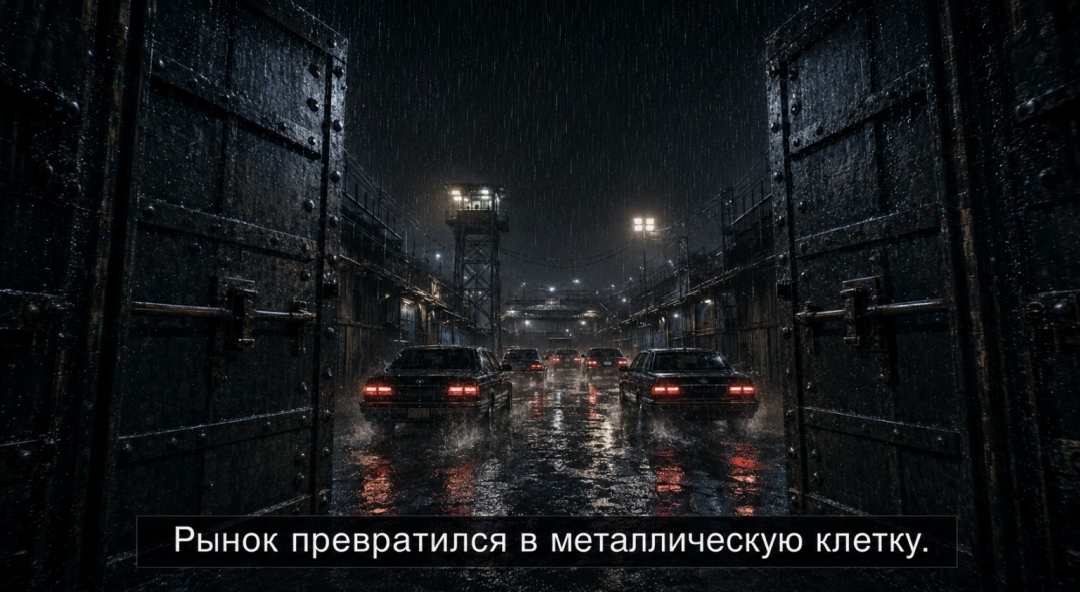
When the last car of the convoy crossed the line of the old gates, nothing outside seemed to change: the rain still drummed on the pavilion roofs, headlights still slid across warehouse walls. And then the steel leaves swung shut behind them — with a crash that rolled its echo across the whole yard. At the same instant the floodlights on the northern exit went dark.
The Architect looked up from the map. The red glow of the monitors fell across his face, and for a single moment his eyes seemed to shine on their own — before combat mode ever kicked in. He touched his headset and spoke evenly, without a single wasted note:
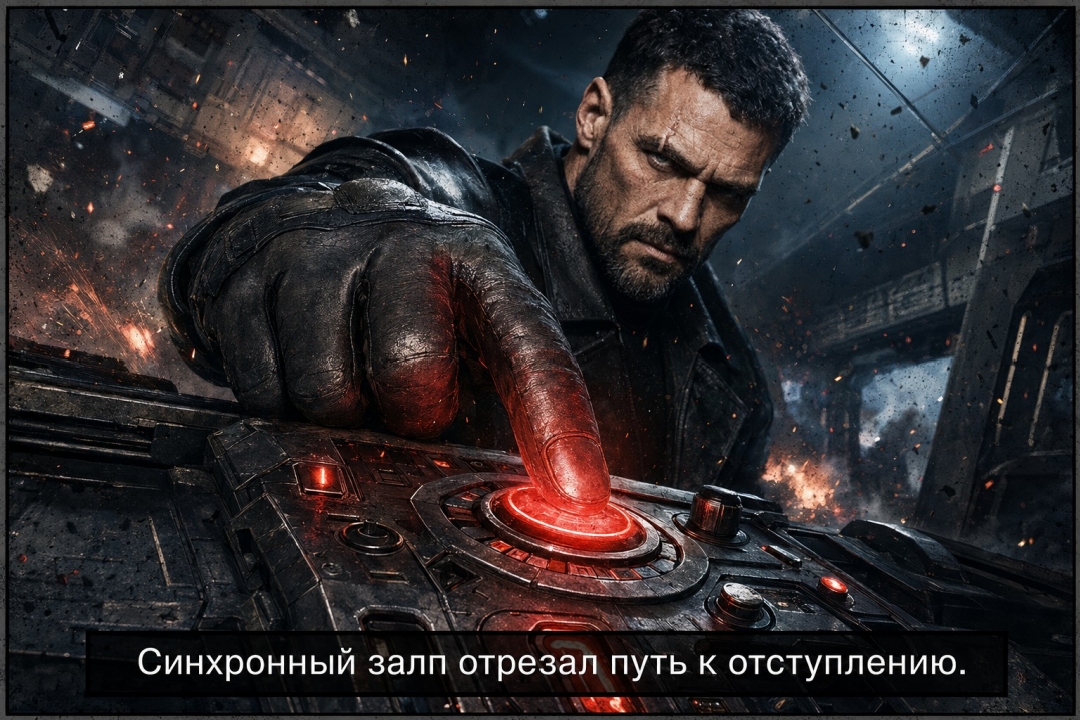
At a distant post, Omega Pirate waited for the indicator to change color. The red ring beneath his palm was the only bright spot in the dark compartment. He didn't rush: rushing is for those who doubt. His finger came down on the button — calmly, the way you set the period at the end of a sentence.
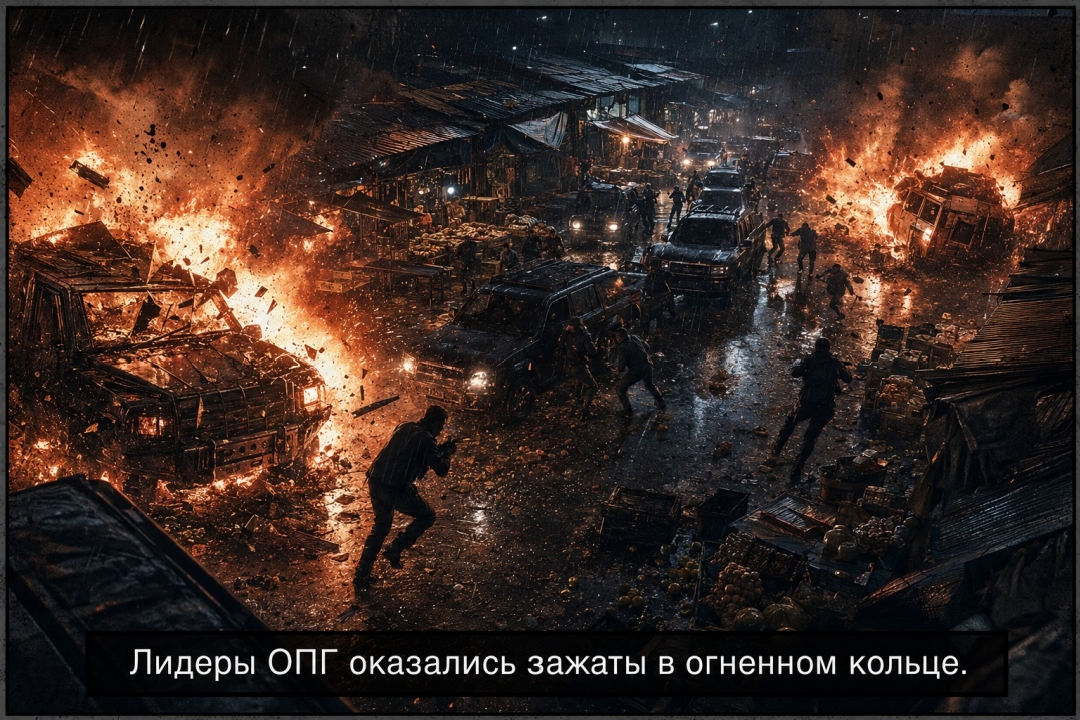
The blast came from both sides at once. The lead car lost its drive; the rear one went up in flames right by the gates. The convoy compressed like a spring — but there was nowhere left for it to move. Between the two fires, ringed by smoke and steam, stood the best men of five crews. The Pack didn't attack the convoy. It simply removed from the city every road the convoy could have used.
Dance of Death
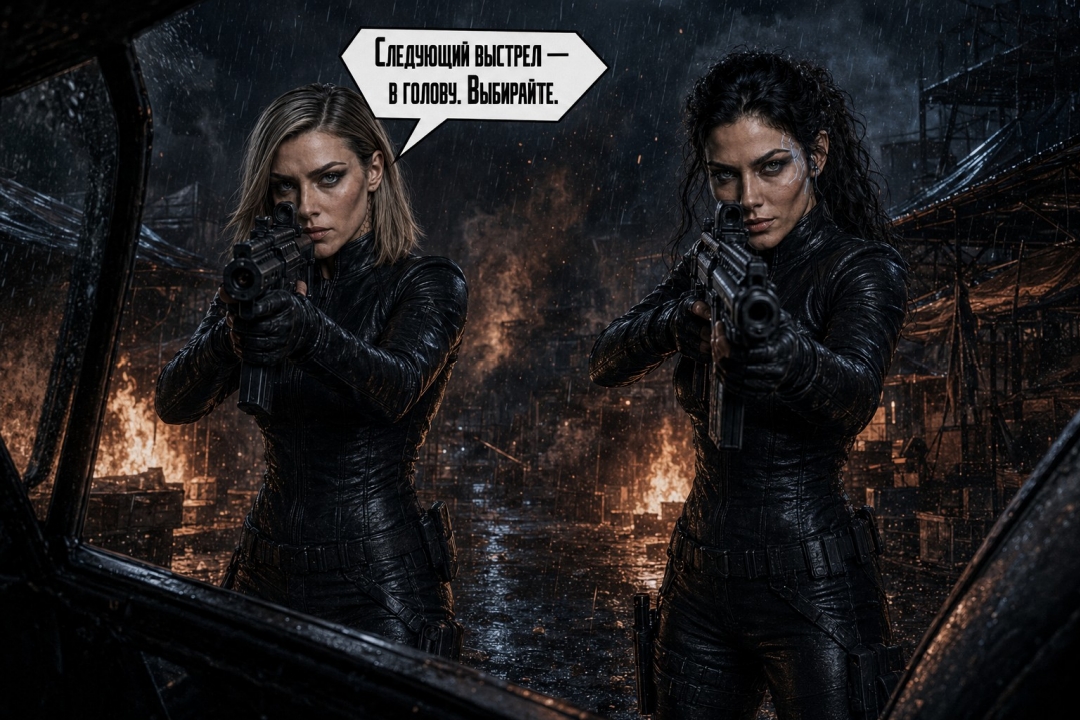
And then they walked out of the smoke and flame. Gina and Alpha — shoulder to shoulder, never breaking stride, as if the inferno around them were nothing but a backdrop staged for their entrance. Their leather suits gleamed in the firelight, and the guns in their hands pointed down — down, for now.

The crime bosses, huddled together in the wrecked car, froze: red laser dots danced across their chests and foreheads. One or two still held their guns — but not a single hand came up. They all understood the same simple thing at once: if the girls had wanted to shoot to kill, it would already be over.
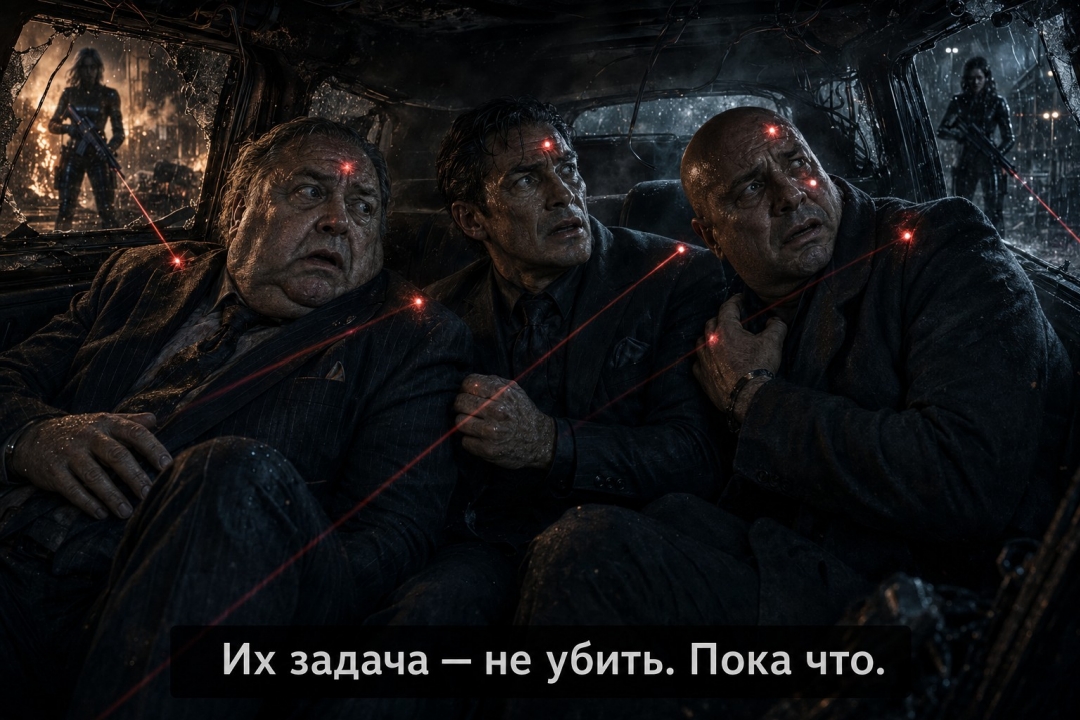
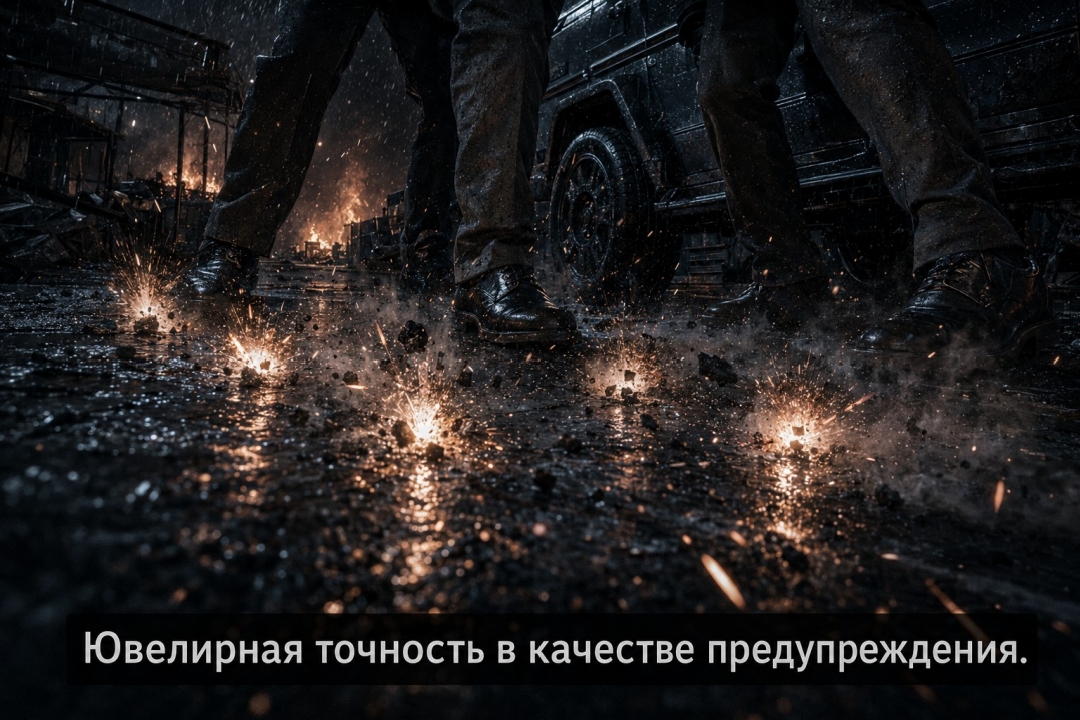
The first burst landed at their very feet — bullets biting into the wet asphalt within a hair's breadth of their boots, kicking up showers of sparks. Not one so much as grazed a man. That was what frightened them most: precision like that leaves no room to hope for a miss.
Gina raised her gun to the eye level of the Solntsevo boss — the very one who, hours earlier, had slammed his fist on the table. Alpha stood beside her, her pupils contracting into perfect hexagons. Gina's voice was almost gentle:
The Architect's Finale
And then he walked out of the smoke. We stood behind him like a solid wall — the whole Pack, shoulder to shoulder. The Architect crossed the ruined market the way an owner walks through his own house after the renovation: unhurried, appraising, never watching his step.

He stopped over his fallen enemies, whose time had run out that night. The wolf's eyes burned a steady red, and in them there was neither fury nor triumph — only a verdict. His voice was colder than a north wind:
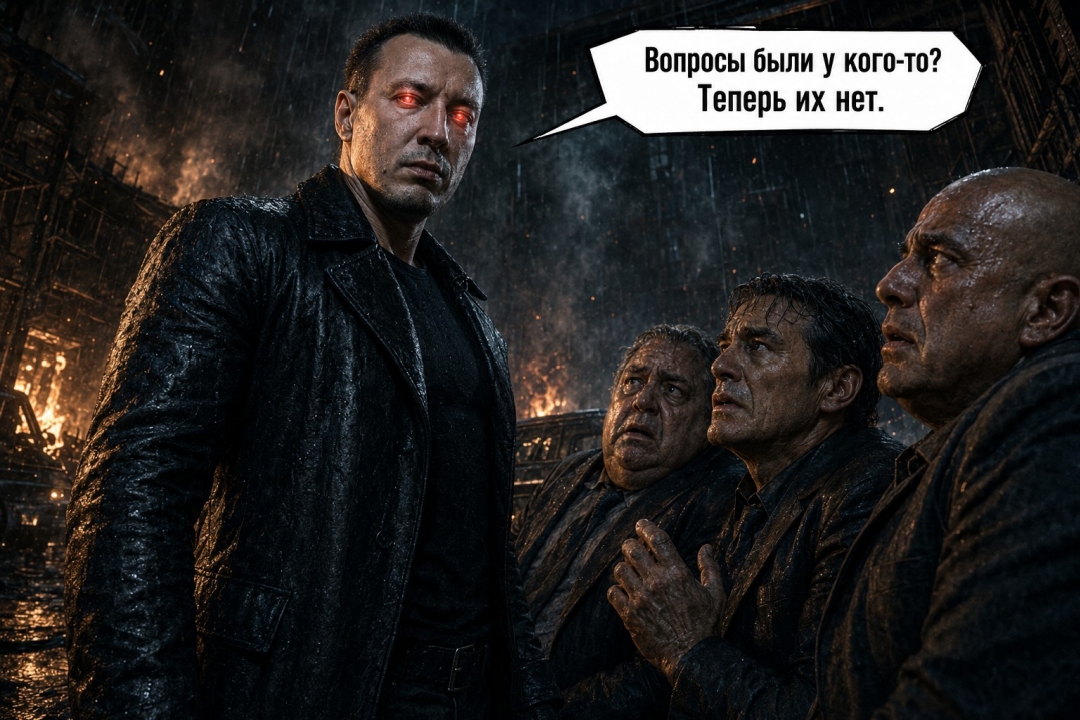
No one answered. So the Architect did the thing no one expected: he didn't shoot. He raised an open palm — the gesture the whole Pack knew — and said, without turning around:
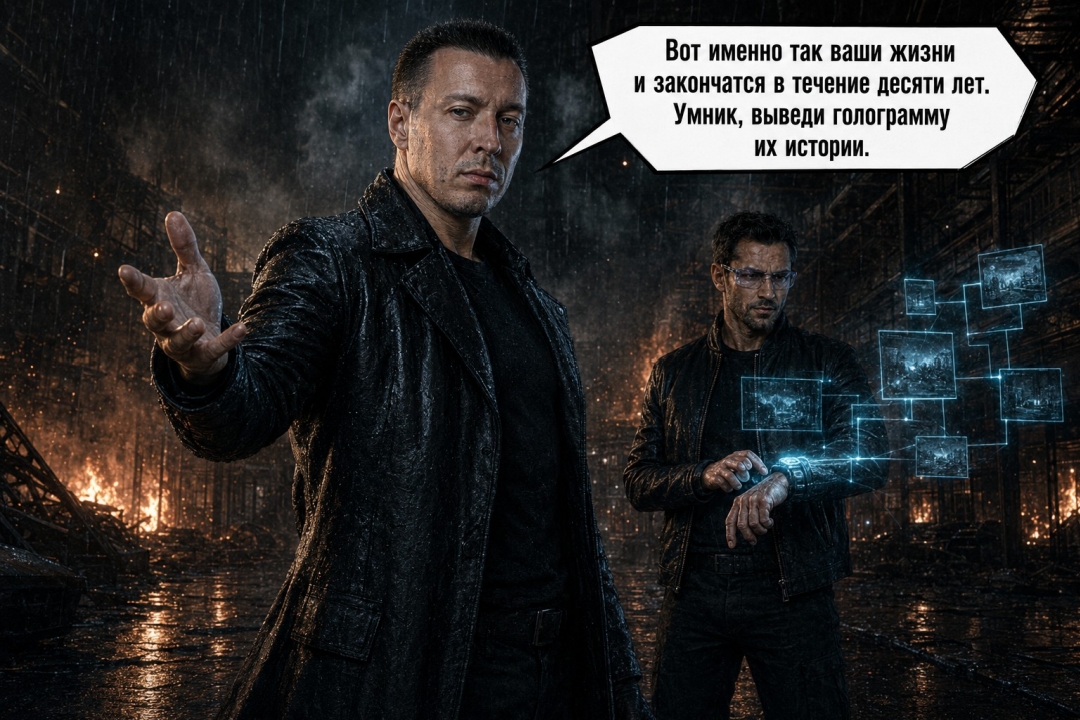
Above the market, right there in the rain, a projection flared to life. Their future — the real one, unedited: betrayals by those closest to them, the carve-ups and bullets in the back, a wretched old age in prison cells, total oblivion. The faces on the hologram aged before our eyes. Ten years of ruin, compressed into a few seconds — and every man sitting on the wet asphalt recognized himself in those frames.
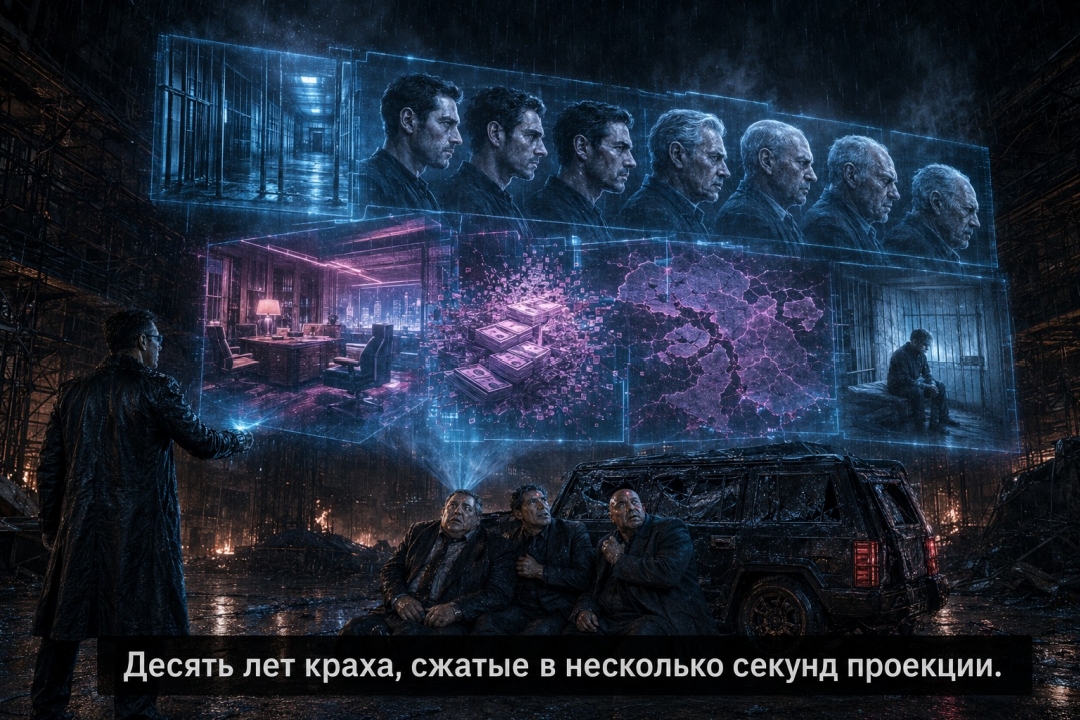
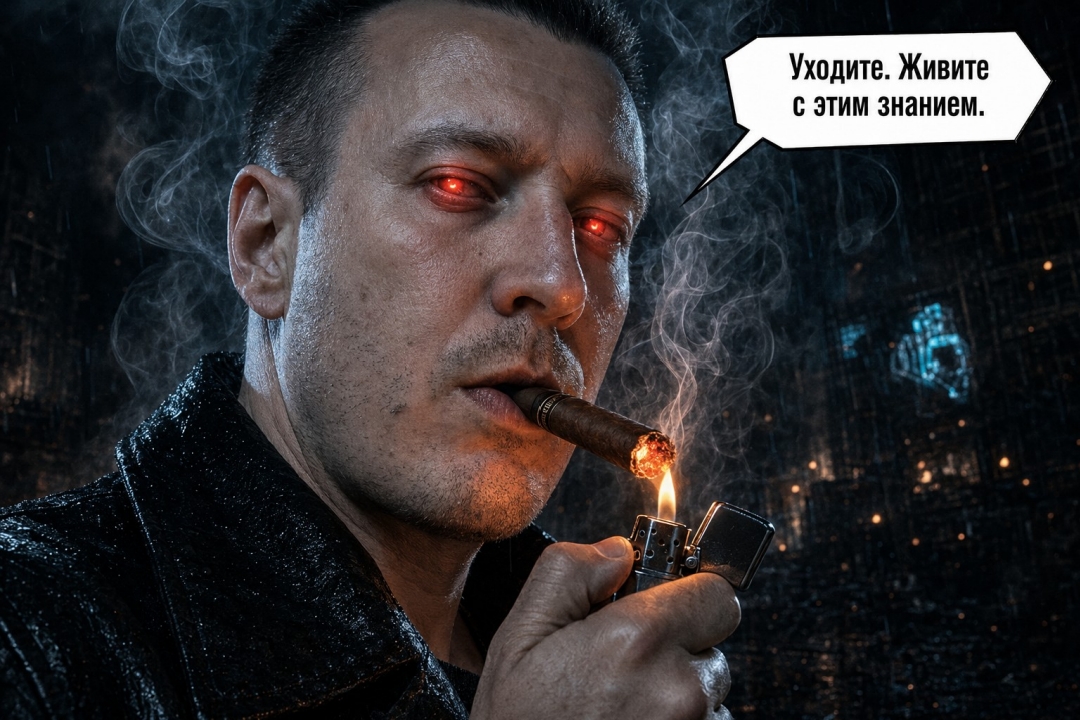
The Architect stared straight into their souls with his blazing red wolf's eyes — and slowly, deliberately, lit a cigar. The lighter's flame trembled in the rain, but his hand didn't waver a millimeter. Then he let out a thick cloud of smoke and passed his sentence — the most terrible one possible, because there was no death in it:
The Road Home
We left without goodbyes. Pink lightning crackled all around, tearing through the fabric of reality — and above the ashes of the old world a portal opened, humming with the energy of three centuries. The Pack fell into marching order one last time in this era.

I walked last, holding the Architect by the arm, and at the very threshold of the portal I turned around. The rain was smothering the last of the fires, and the nineties were vanishing behind our backs — leaving behind nothing but ashes and a legend of a syndicate that had neither a past nor a future. I looked at him and smiled: the old scar we had come here for no longer ached.
We were going home. For good.